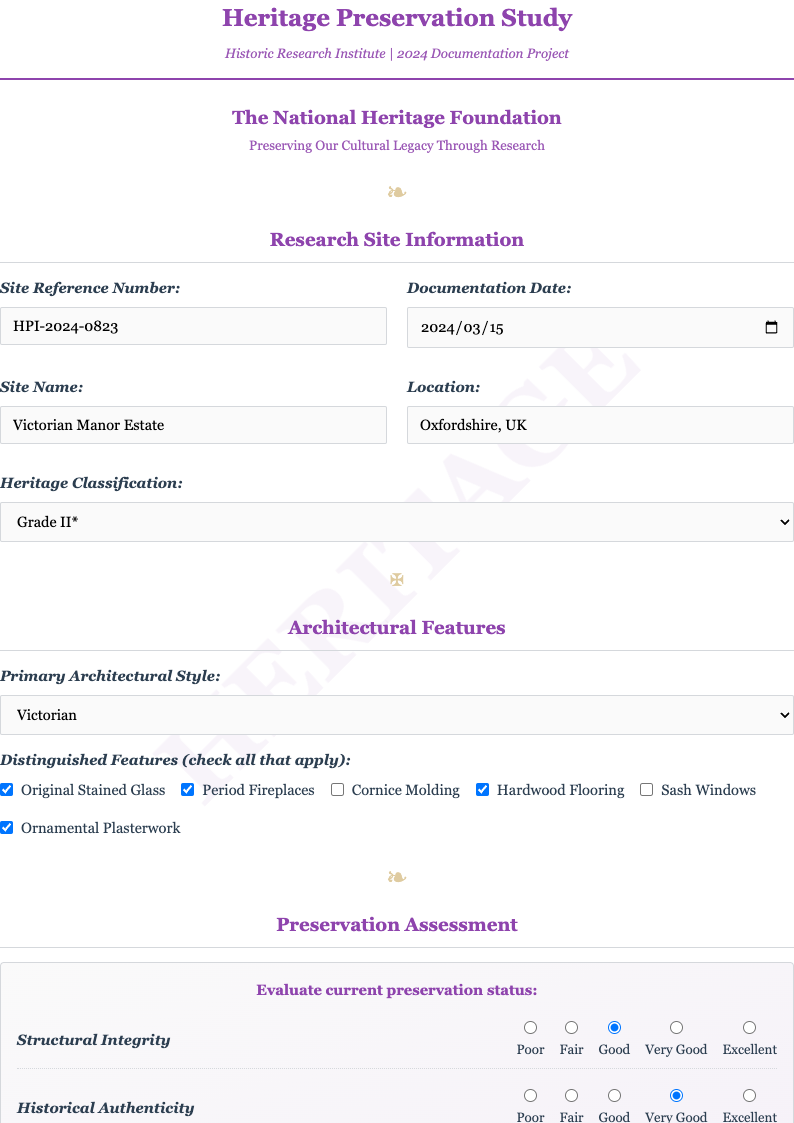
Research Data Collection Form Templates
Edit and customize research data collection forms online. Export professional documents to PDF instantly.
Browse Templates
Showing 20 of 20 templates
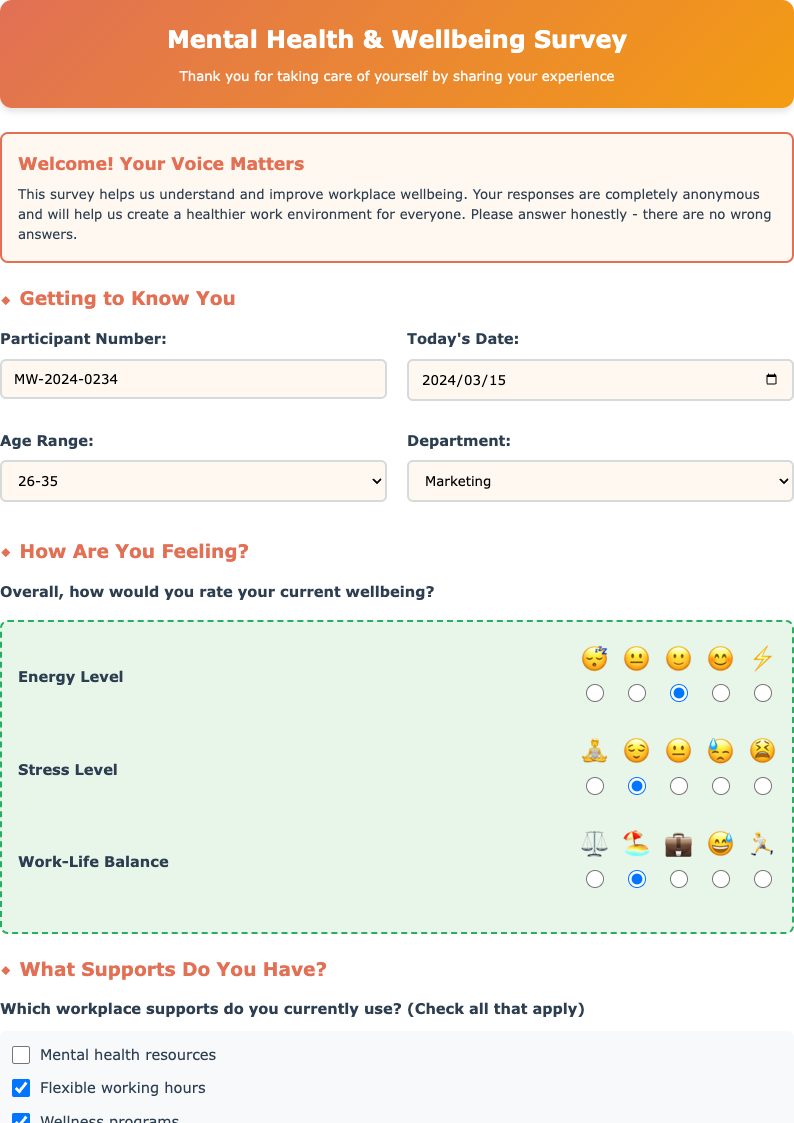
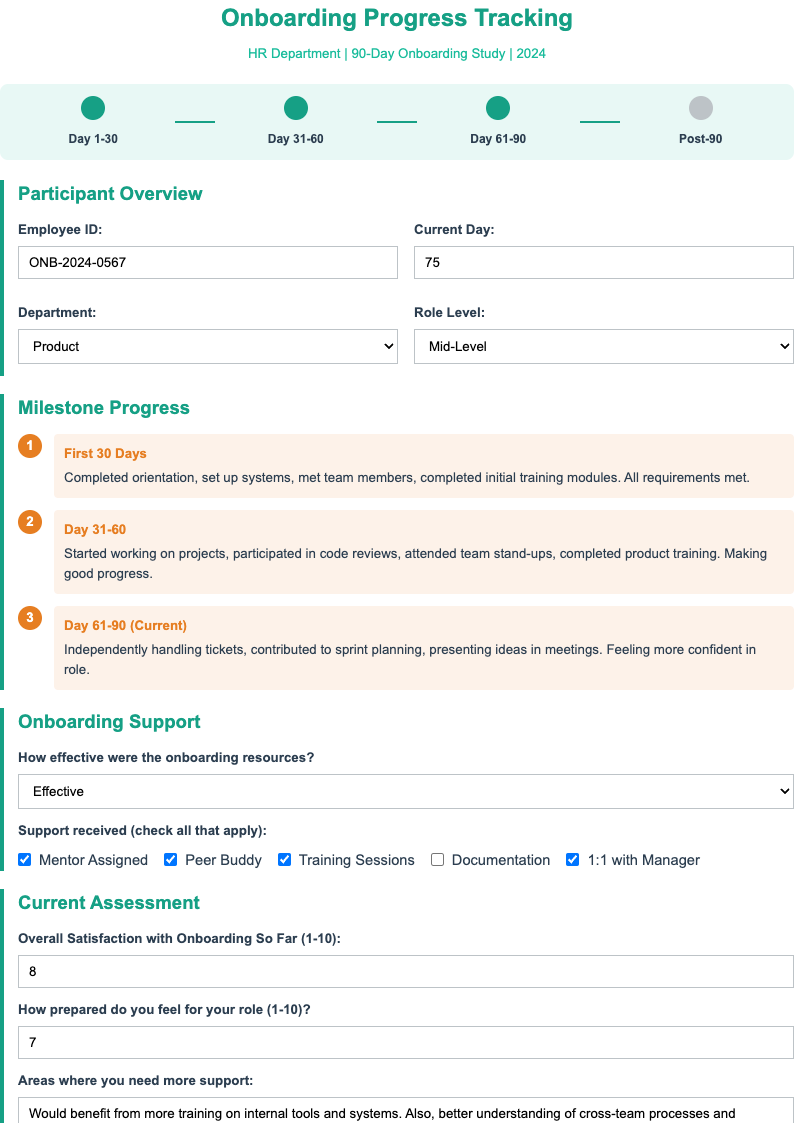
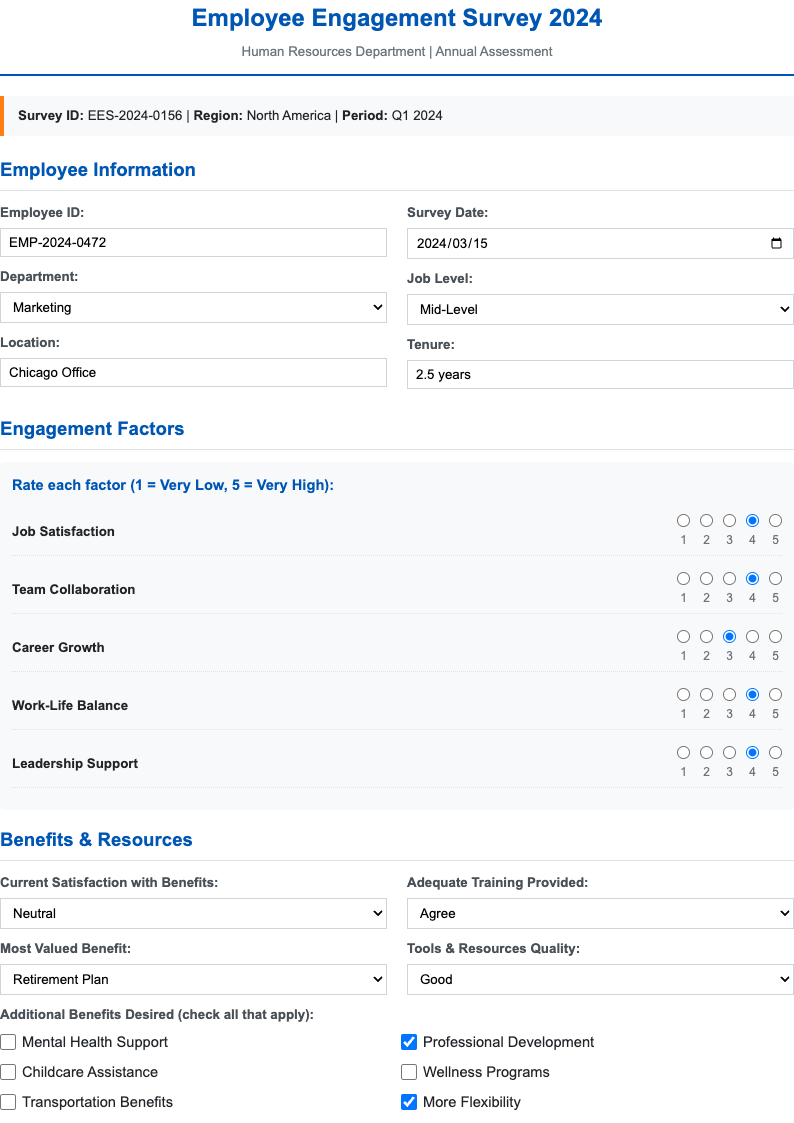
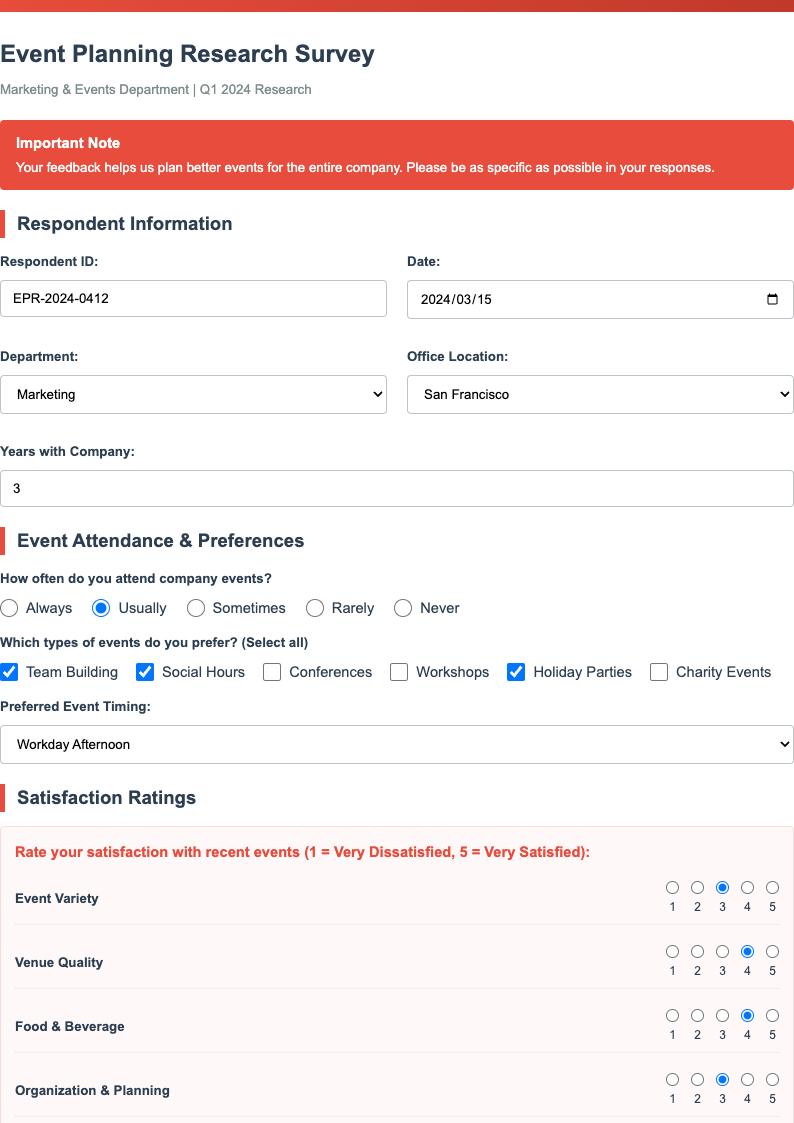
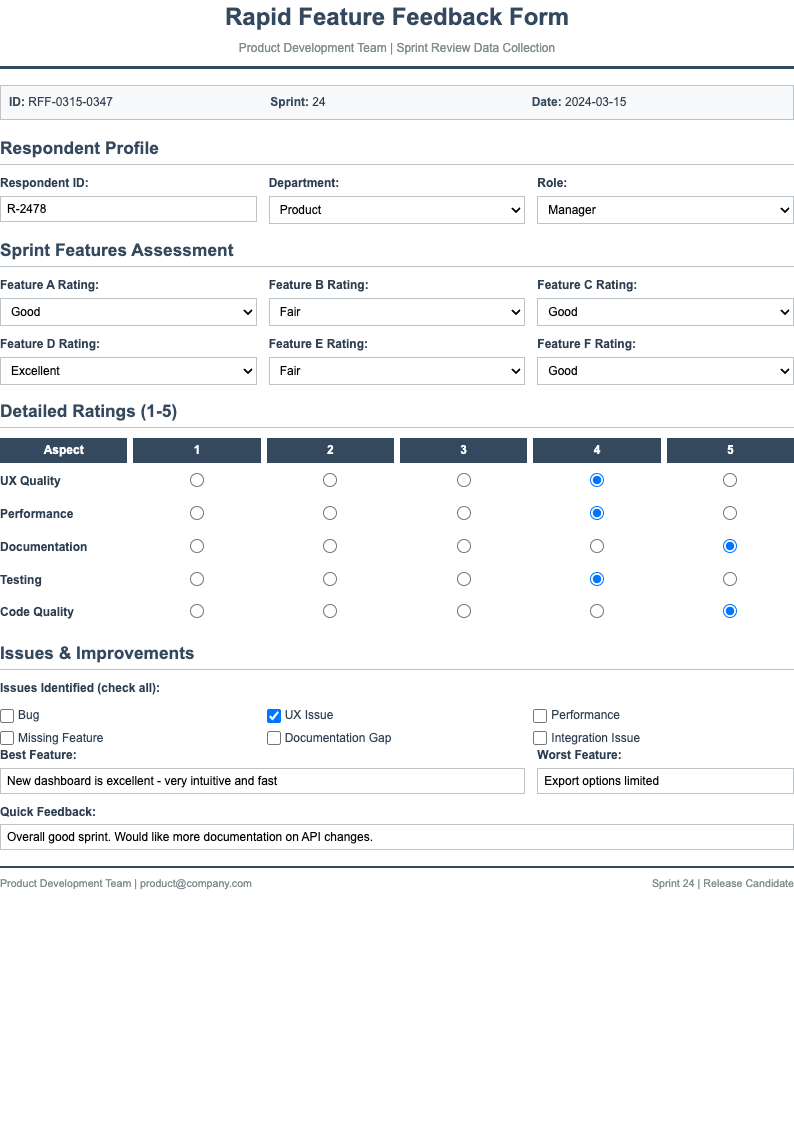
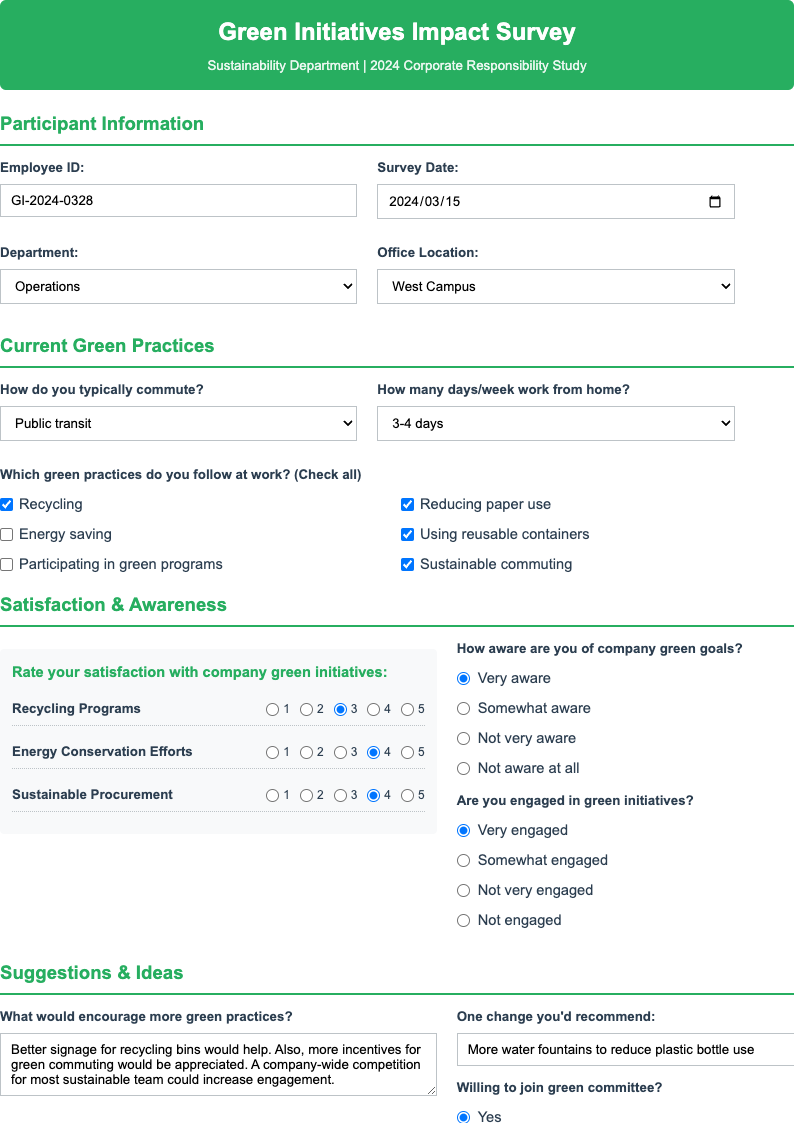
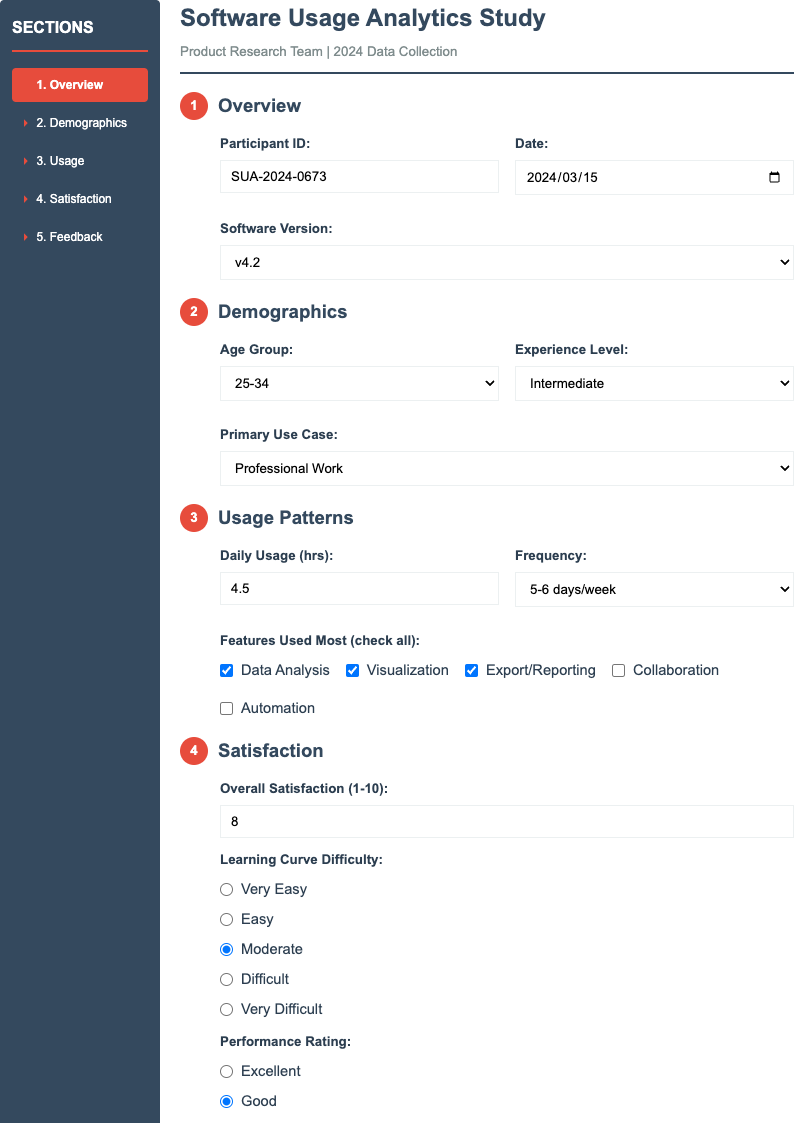
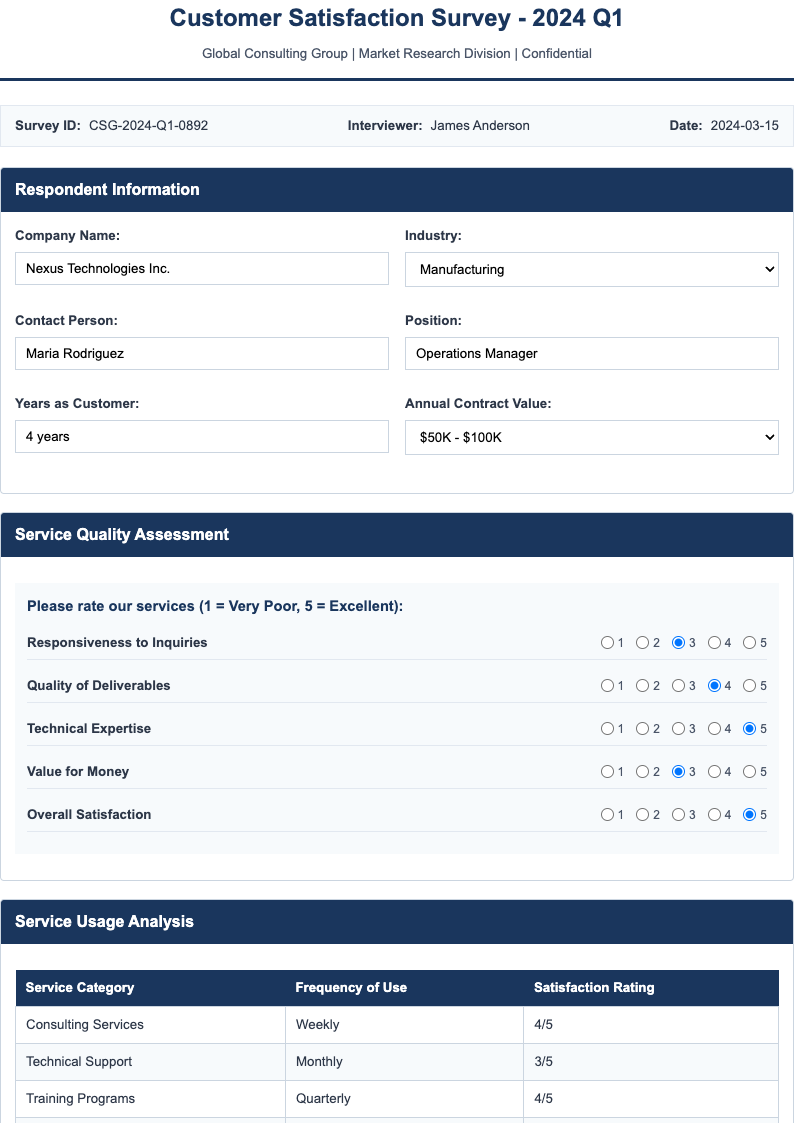
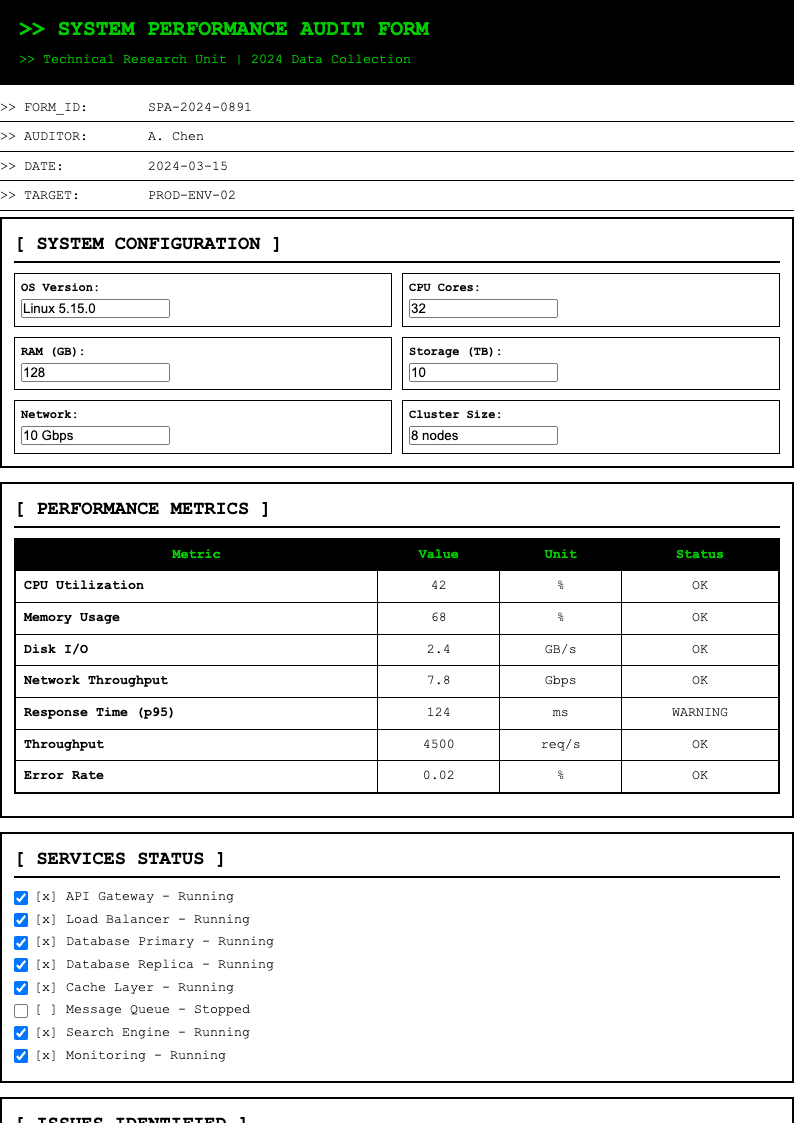
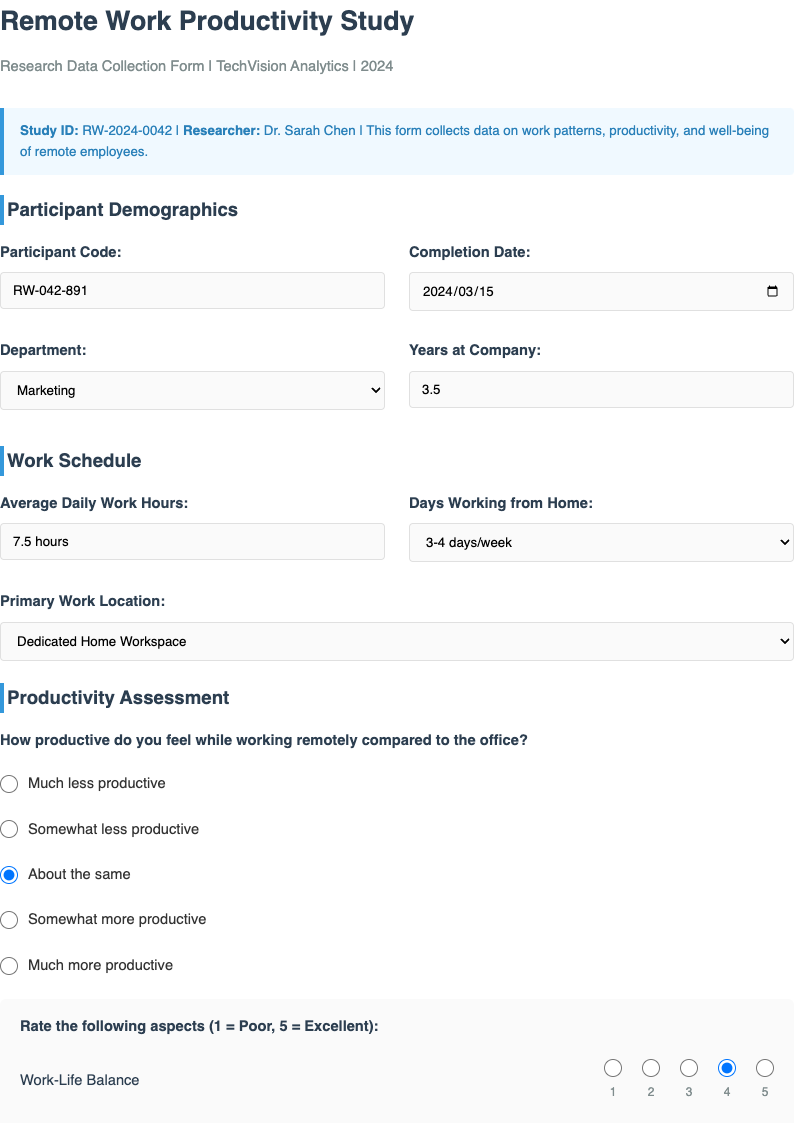
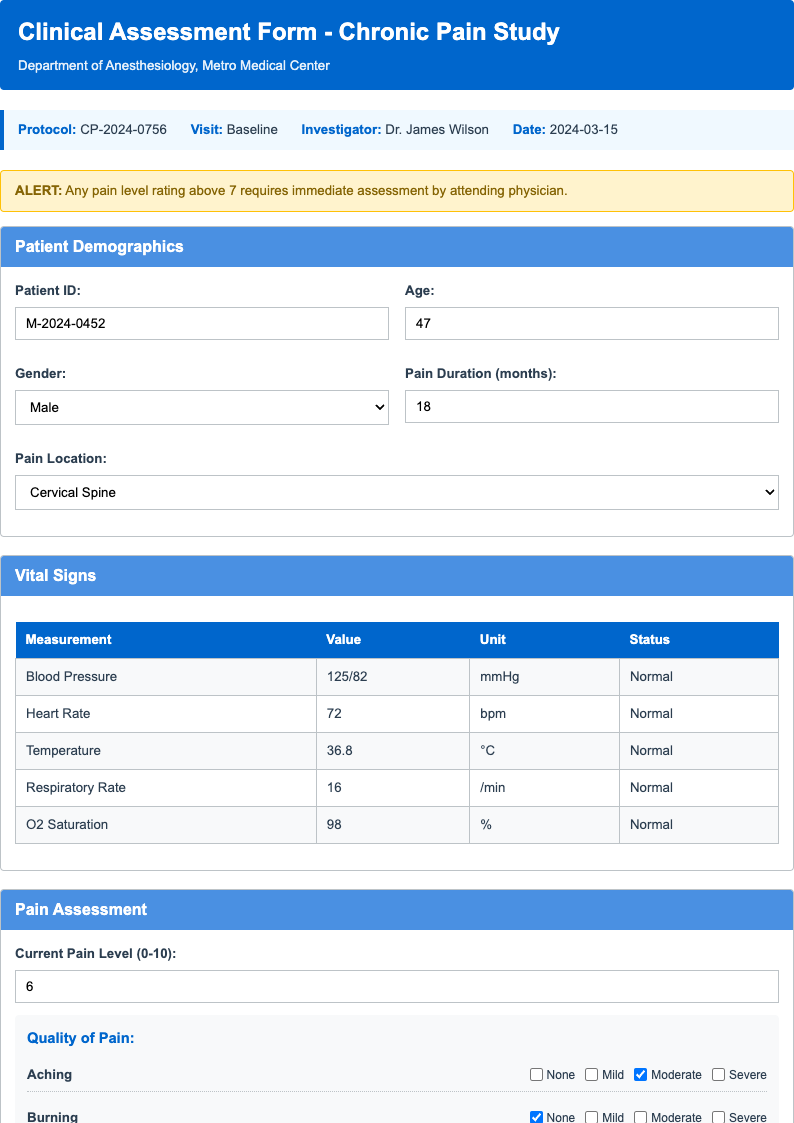
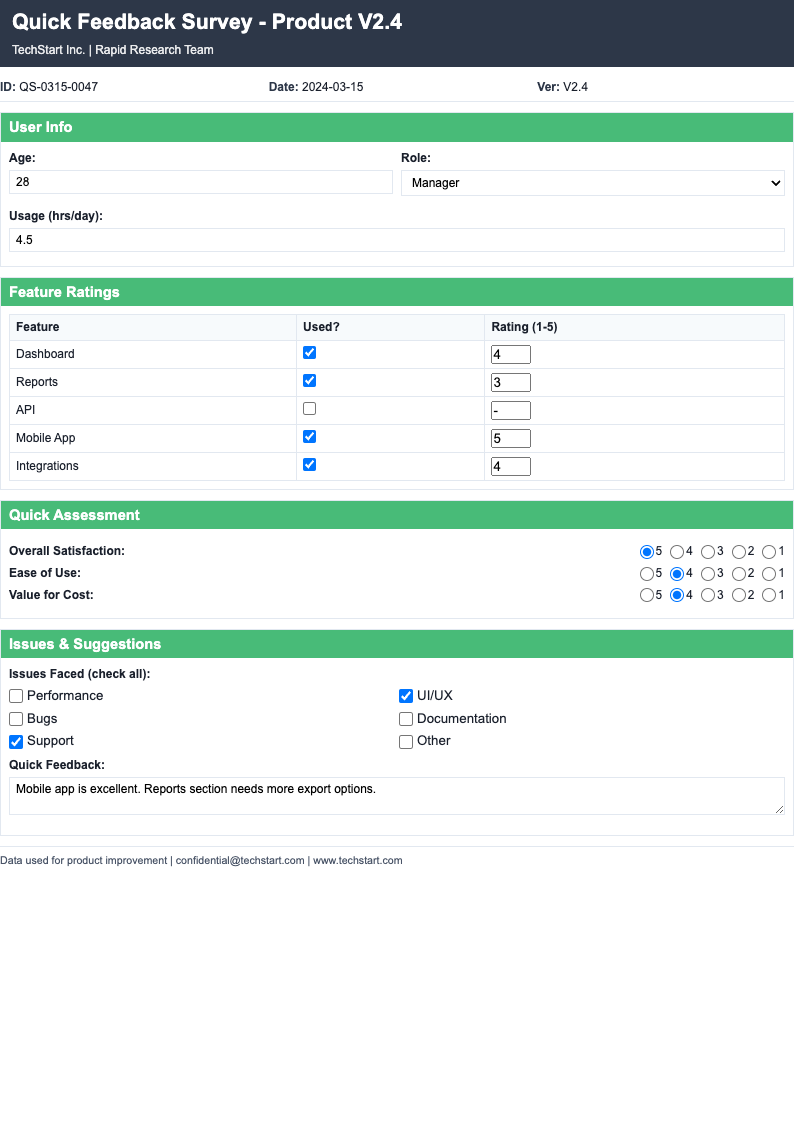
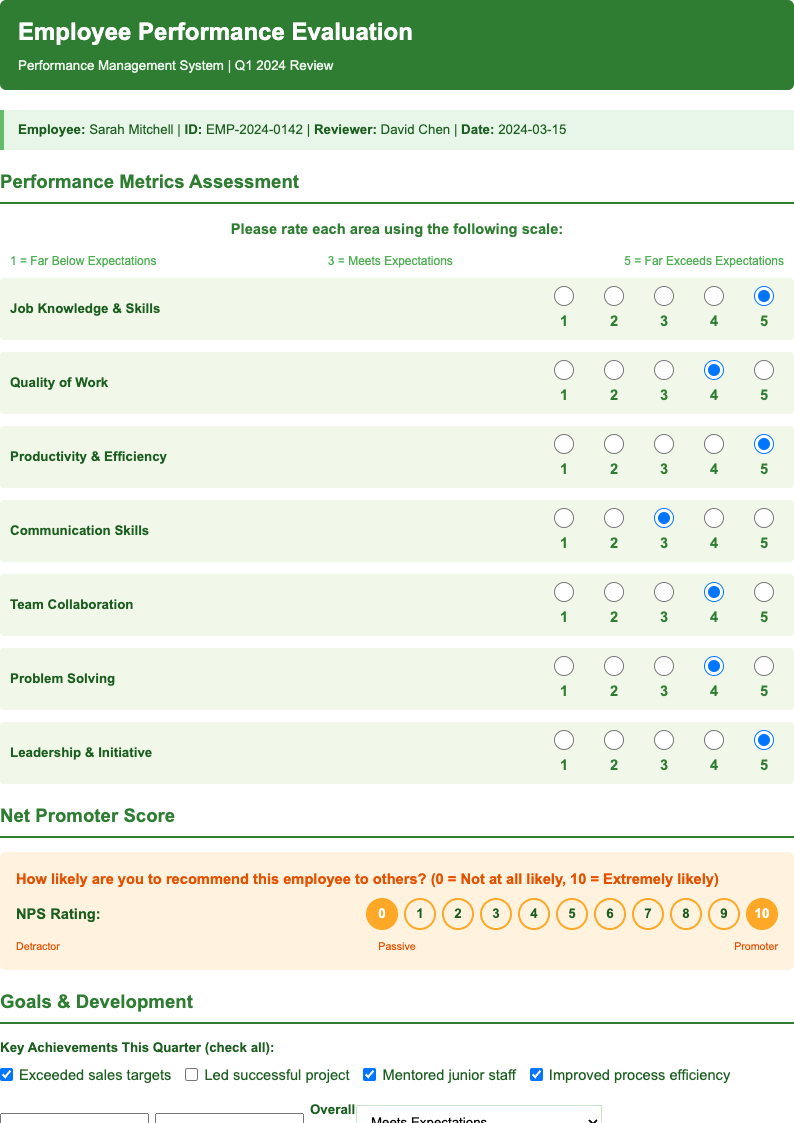
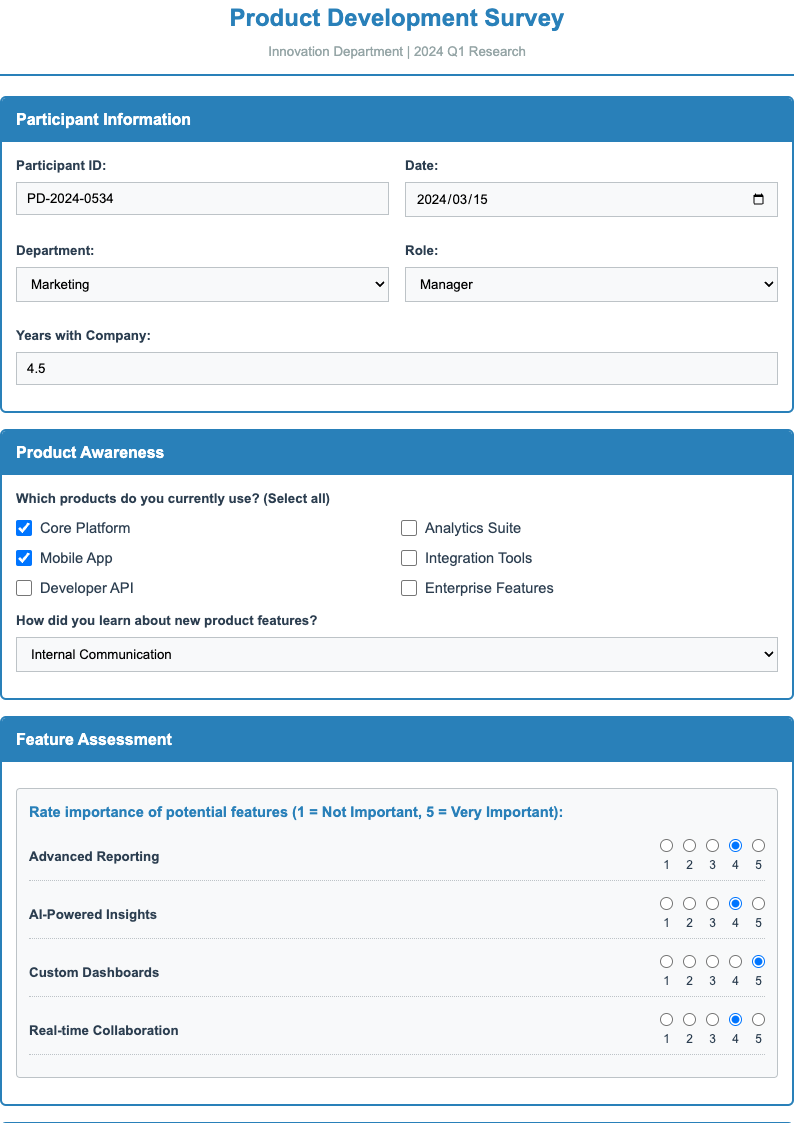
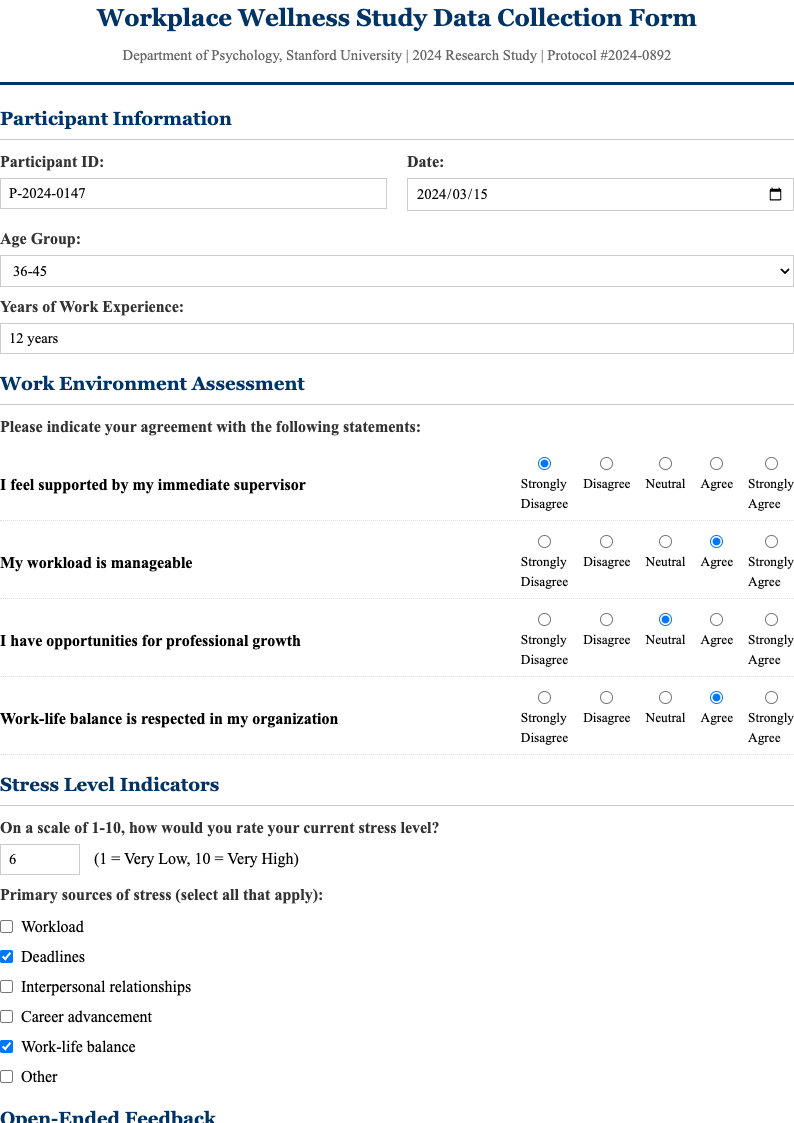
Create Custom Research Data Collection Form with AI
Don't find the perfect template? Use our AI-powered document generator to create a custom research data collection form tailored to your specific research needs in minutes.

Frequently Asked Questions About Research Data Collection Forms
Find answers to common questions about our research data collection form templates.
What is a research data collection form?
- A research data collection form is a structured document used in academic, clinical, and market research to systematically gather information from study participants. These forms help researchers collect standardized data that can be analyzed to draw meaningful conclusions. Our templates provide professional frameworks you can customize online and export to PDF for your research projects.
How do I use these research data collection forms?
- Simply browse our collection, click on any template to preview it, then click the Edit this template button. You can customize the research data collection form online in our editor, add your research-specific questions, modify sections, and export it to PDF format after editing. No software installation required.
What types of research data collection forms are available?
- We offer a variety of research data collection form templates including clinical research forms, survey questionnaires, qualitative research data collection sheets, informed consent forms, behavioral observation forms, and interview templates. Each template is designed for specific research methodologies and can be fully customized.
Are these research data collection forms free?
- Yes! All our research data collection form templates are completely free to use. You can browse, preview, and edit any template without signing up. Simply choose a template that fits your research methodology and start customizing it for your specific needs.
Can I customize these research data collection forms?
- Absolutely! Every research data collection form is fully customizable. You can edit text, modify sections, add your own research questions, change formatting, include demographic questions, add skip logic, and export to PDF format after editing. Perfect for academic research, clinical studies, and market research.
What should I include in a research data collection form?
- A comprehensive research data collection form should include: participant identification information with anonymization options, consent and ethics statements, demographic questions, research-specific questions or measurements, instructions for completion, space for researcher notes, and contact information. Our templates include all these sections.
Do I need to install any software?
- No installation required! All research data collection forms can be edited directly in your web browser using our online editor. You can access them from any device with an internet connection, customize your form, and export to PDF. Perfect for researchers working in the field or lab.
Can I save my edited research data collection forms?
- Yes! When you create a free account, you can save all your edited research data collection forms to your dashboard. This allows you to return later to make changes, create multiple versions for different studies, or share with your research team.
What format will my completed research data collection form be in?
- After editing your research data collection form online, you can export it as a PDF file. This ensures professional formatting, preserves your layout, and makes it easy to print, share with participants, or submit to your research ethics committee.
Are these templates suitable for clinical research?
- Yes, our research data collection forms include templates specifically designed for clinical research and medical studies. They follow research ethics standards and include sections for patient information, consent statements, clinical measurements, adverse event reporting, and investigator notes. Fully customizable for your specific clinical trial needs.
What are the different data collection methods in research?
- Research data collection methods include: surveys and questionnaires for structured written responses, interviews for in-depth one-on-one conversations, observations for systematic recording of behaviors, and focus groups for group discussions. Our templates support all these methods with appropriate form structures for each approach.
How do I ensure research ethics compliance?
- Our research data collection form templates include informed consent sections, participant rights statements, and confidentiality assurances. You should customize these sections according to your institutional review board or ethics committee requirements. Always obtain proper approval before conducting research.
Can I use these forms for qualitative research?
- Absolutely! We offer specialized templates for qualitative research including interview guides, observation checklists, and thematic analysis forms. These templates help you systematically collect and organize qualitative data such as interview responses, field notes, and observational data.