Edit Privacy Policy Templates Online for Free
Communicate your data practices clearly with AI Formatter's Privacy Policy templates. Each layout is editable online, so you can document what you collect, why you collect it, how long you keep it and which rights users can exercise, in language visitors actually understand.
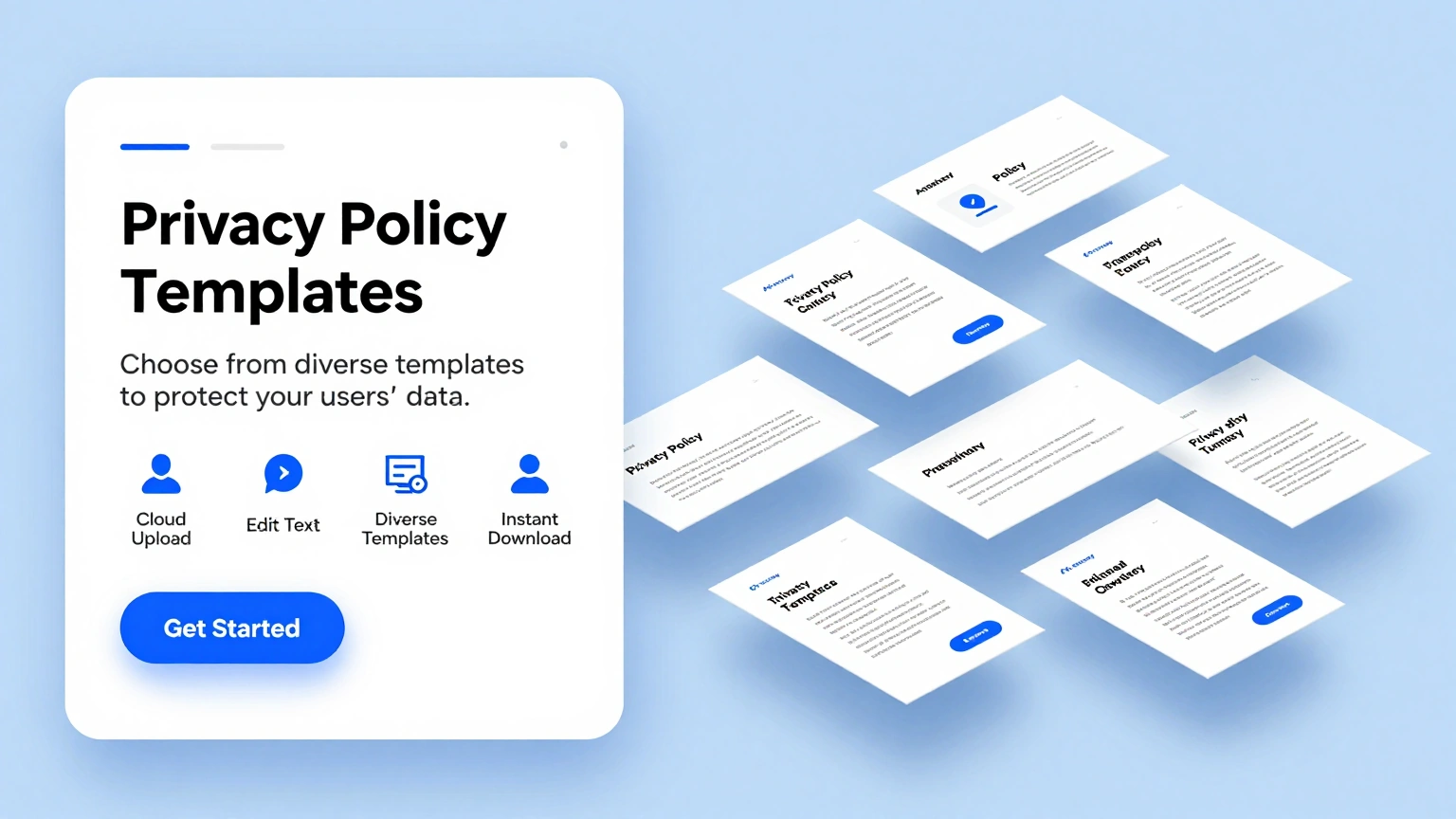
Showing 20 of 30 templates
Frequently Asked Questions About Our Templates
Common questions about drafting and customizing our Privacy Policy templates.
- Are these Privacy Policy templates free to use?
- Yes, every Privacy Policy template is completely free to open, edit and download. There are no paywalls, watermarks or seat limits. Small businesses, app developers and community sites can publish professional documentation without hiring a law firm for the formatting. The whole process happens in your browser, so there is nothing to install and nothing to configure before you start editing your document.
- What sections does a Privacy Policy template include?
- A complete Privacy Policy template covers data collection, purposes of use, cookies and tracking, data sharing, retention periods, user rights, children's privacy, security measures and contact details. The structure follows the sequence regulators and users expect to find. If anything looks off, you can adjust fonts, spacing, and section order until the page reads exactly the way you want it to.
- Are these templates suitable for GDPR or CCPA compliance?
- The Privacy Policy layouts include sections commonly required by GDPR, CCPA and similar laws, such as legal bases, retention and user rights. However, compliance depends on your specific practices, so have counsel review the final document before publishing it. You can adapt any Privacy Policy template in just a few minutes, swapping in your own details while the underlying structure keeps everything organized and easy to follow.
- Can I customize the template for a mobile app?
- Yes. Adapt the collection section to device identifiers, analytics SDKs and app permissions. A Privacy Policy for an app should also mention platform requirements, and the editable structure lets you add store-specific disclosures where needed. A well-built Privacy Policy template saves you from starting on a blank page, which means your energy goes into the content instead of spacing, margins, and alignment.
- What file formats can I export my Privacy Policy to?
- Export your finished Privacy Policy as Word for legal review or PDF for distribution and record keeping. You can also keep it online and publish the text directly to your website, updating it whenever your practices change. Feel free to compare several Privacy Policy template versions before committing, because every layout in the collection downloads instantly and opens in the same simple editor.
- Do the templates explain cookies and trackers clearly?
- Yes. The cookie section distinguishes essential, analytics and advertising cookies in plain language. A transparent Privacy Policy explains what each category does and how users can control them, which builds trust and satisfies growing regulatory expectations. The goal of every Privacy Policy template on this page is simple: professional results for anyone who needs a reliable document without a steep learning curve.
- How often should I update my Privacy Policy?
- Review it whenever you add new tools, data uses or sharing partners, and at least annually. Dating each revision in your Privacy Policy shows users and regulators that the document is actively maintained rather than copied once and forgotten. If you are unsure which Privacy Policy template fits your situation best, start with the most popular layout and adjust individual sections as your requirements become clearer.
- Do you have filled Privacy Policy examples?
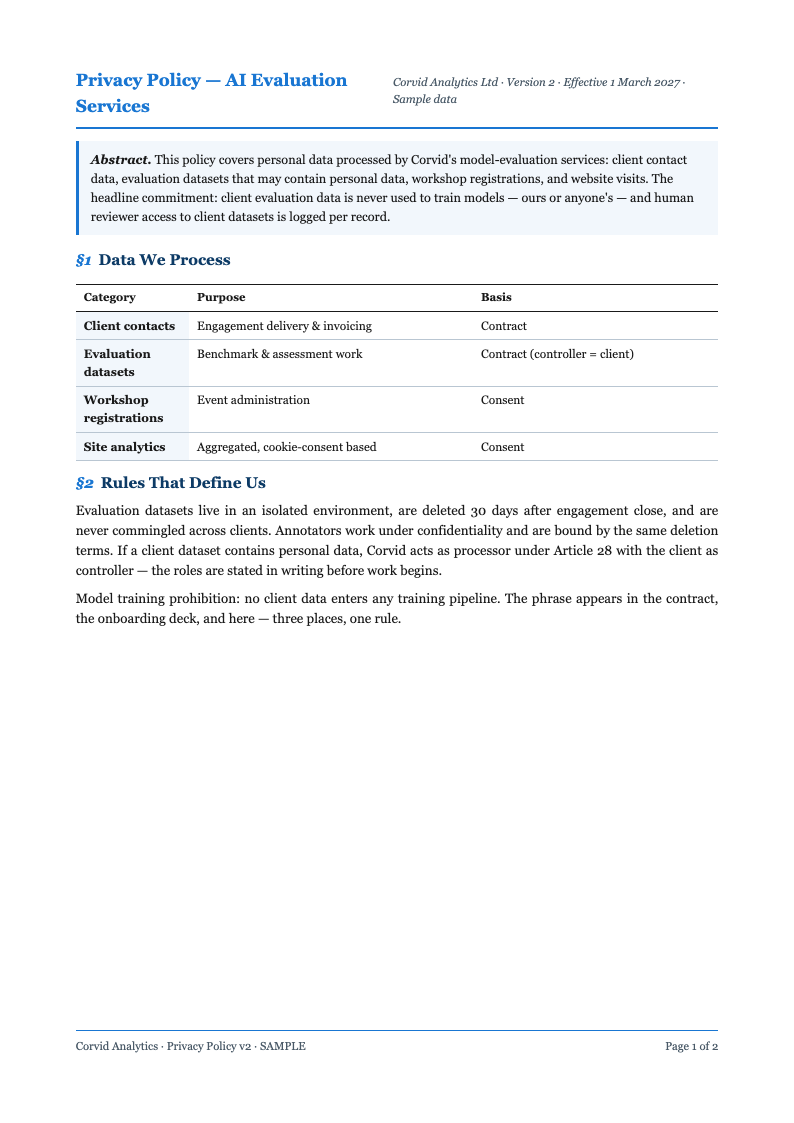
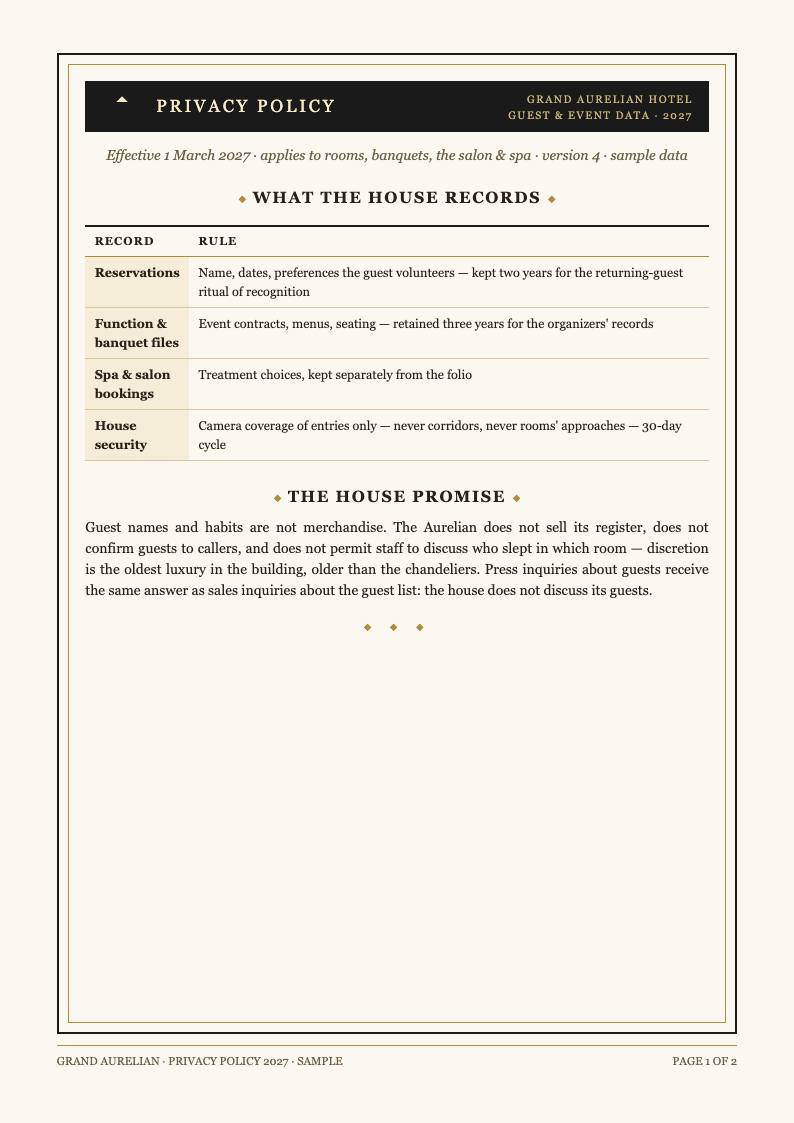
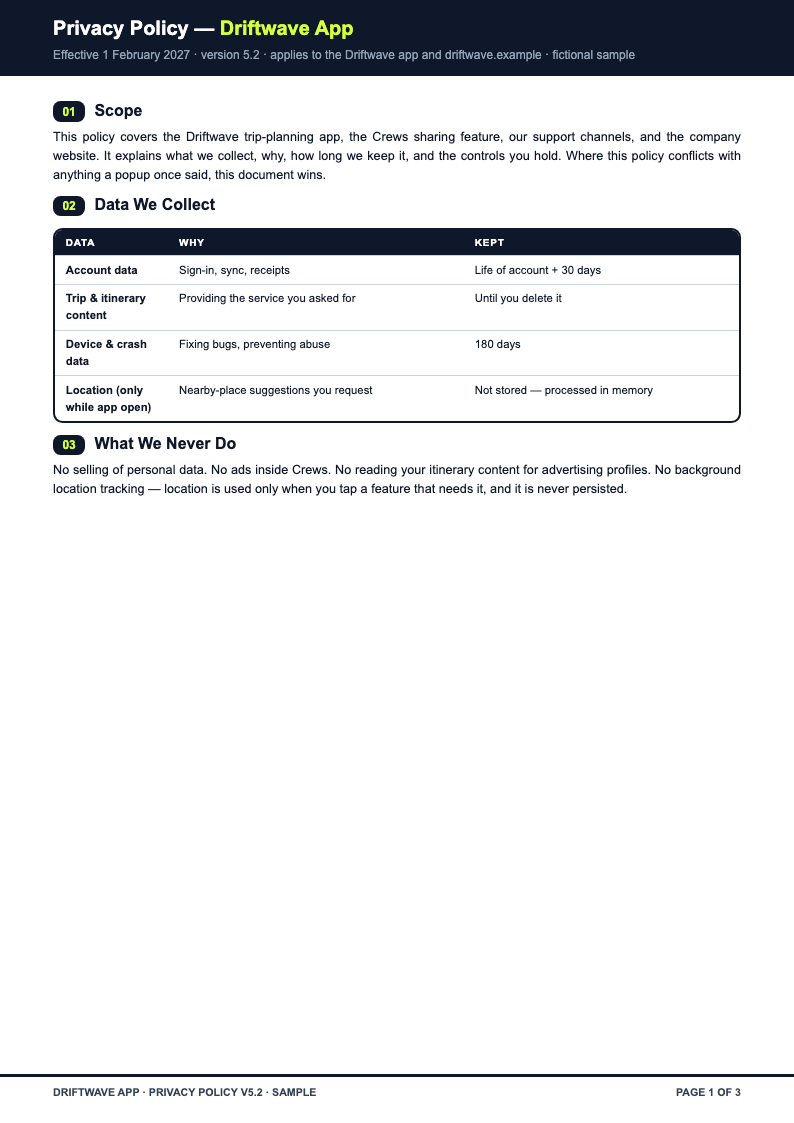
- Yes. Completed samples accompany the blank layouts. Studying a finished Privacy Policy shows how companies phrase data retention windows and user rights in practice, which helps first-time drafters avoid vague commitments that create problems later. Because each Privacy Policy template loads directly in the browser editor, you can preview every change in real time and undo anything that does not look right.
- Can small businesses use these templates?
- Absolutely. A small business Privacy Policy covering website analytics, contact forms and email newsletters fits the structure directly and completely. Clear, honest documentation levels the trust playing field between small independent operators and the large corporations users already know. Teams often standardize on a single Privacy Policy template so every submitted document looks consistent, which makes reviews faster and feedback much easier to act on.
- Should the Privacy Policy include a contact section?
- Yes. Users and regulators must know how to reach you with questions or data requests. Each Privacy Policy template closes with a contact block for email and postal addresses, which several privacy laws explicitly require you to provide. The layout is designed to print cleanly on standard paper sizes, which spares you from manual fixes right before a deadline.
- Can I write the policy in simple language?
- Yes. The templates support plain-language drafting, and regulators increasingly favor it. A readable Privacy Policy with short sentences and defined terms serves users better than dense legal prose, and the editable structure makes simplifying safe. A thoughtfully designed Privacy Policy template also protects you from omissions, since its preset sections prompt you for the details that readers tend to look for first.
- Does the template cover third-party services?
- Yes. Add a sharing section listing processors such as payment providers, analytics tools and email services. Naming third parties in your Privacy Policy is increasingly expected, since users deserve to know who else handles their information. You keep full control over every Privacy Policy template you download, with no watermarks and no hidden steps standing between you and the finished file.
- Is an email consent section included?
- Yes. The layouts cover marketing consent, unsubscribe rights and record keeping for opt-ins in dedicated clauses. Documenting consent properly inside your Privacy Policy aligns your published documentation with anti-spam rules and builds lasting credibility with your email subscribers. Many visitors download a Privacy Policy template first and customize it afterward, which is a practical way to meet a tight deadline without sacrificing overall quality.
- Can I publish the policy directly on my website?
- Yes. After editing, export your Privacy Policy and paste the sections into your site, or upload the PDF. Remember to link it in your footer and at every data collection point, since visibility is part of good practice. Whichever Privacy Policy template you choose, the editing controls work the same way, so learning one layout means you already know how to use them all.
- Do I need a lawyer to use these templates?
- The templates give you professionally organized structure and standard language, not legal advice. Practices differ between organizations, so a counsel review of your finished Privacy Policy is the safest way to confirm it matches what you actually do with data. Bookmark the Privacy Policy template collection that matches your workflow, and you will always have a dependable starting point ready the next time a document is due.
Ready to Document Your Data Practices?
Build your Privacy Policy on a professionally structured template. Edit collection, cookies and user rights sections online, then publish a document your users can actually understand and trust.
Free templates • AI-powered editing • No sign-up required