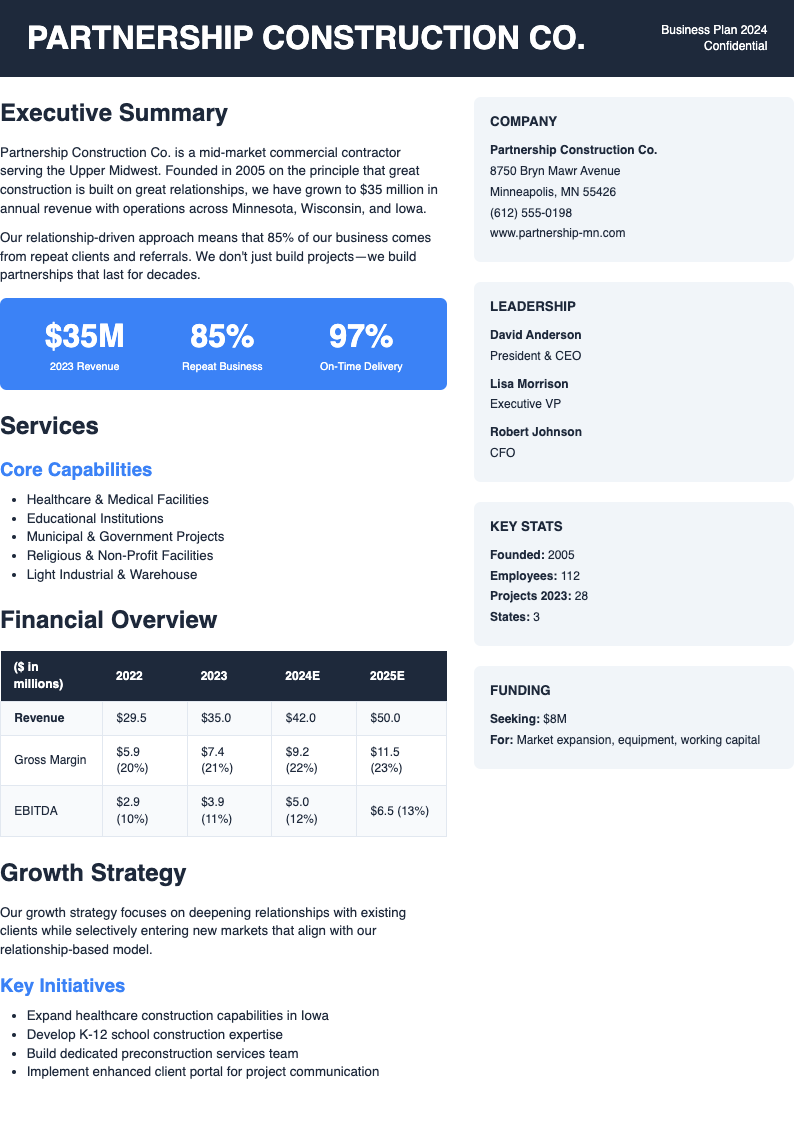
Free Construction Business Plan Templates
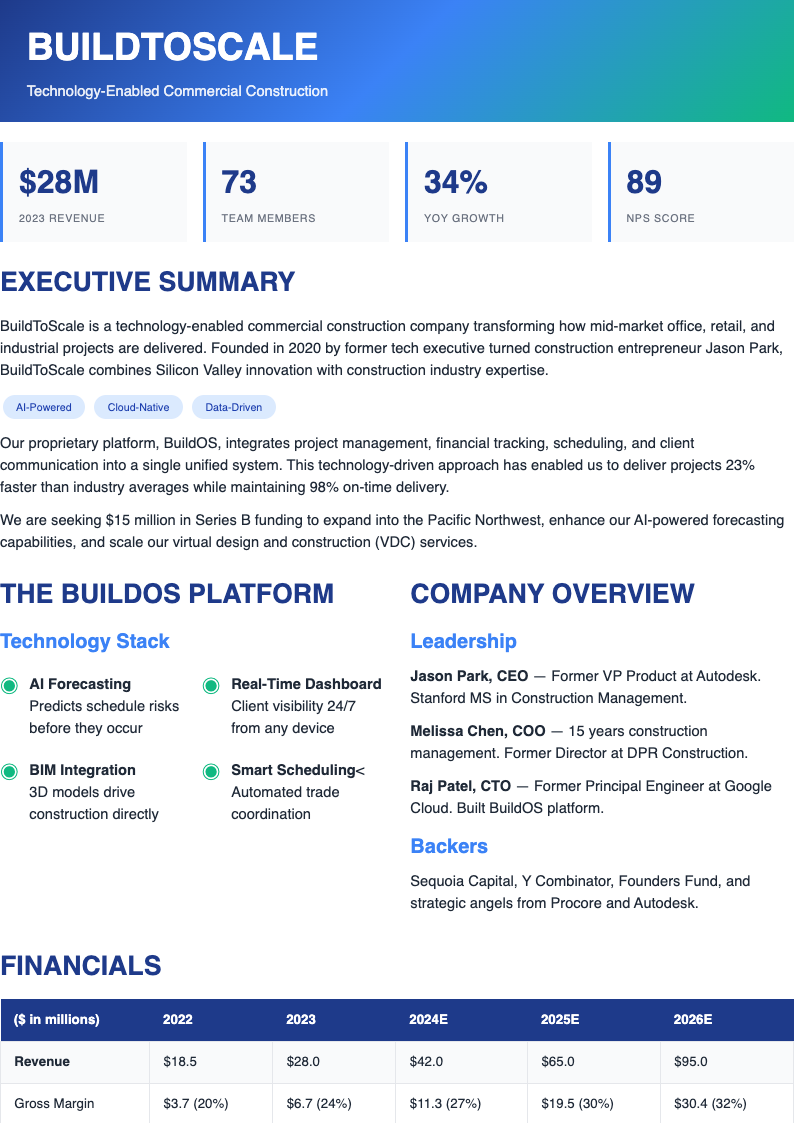
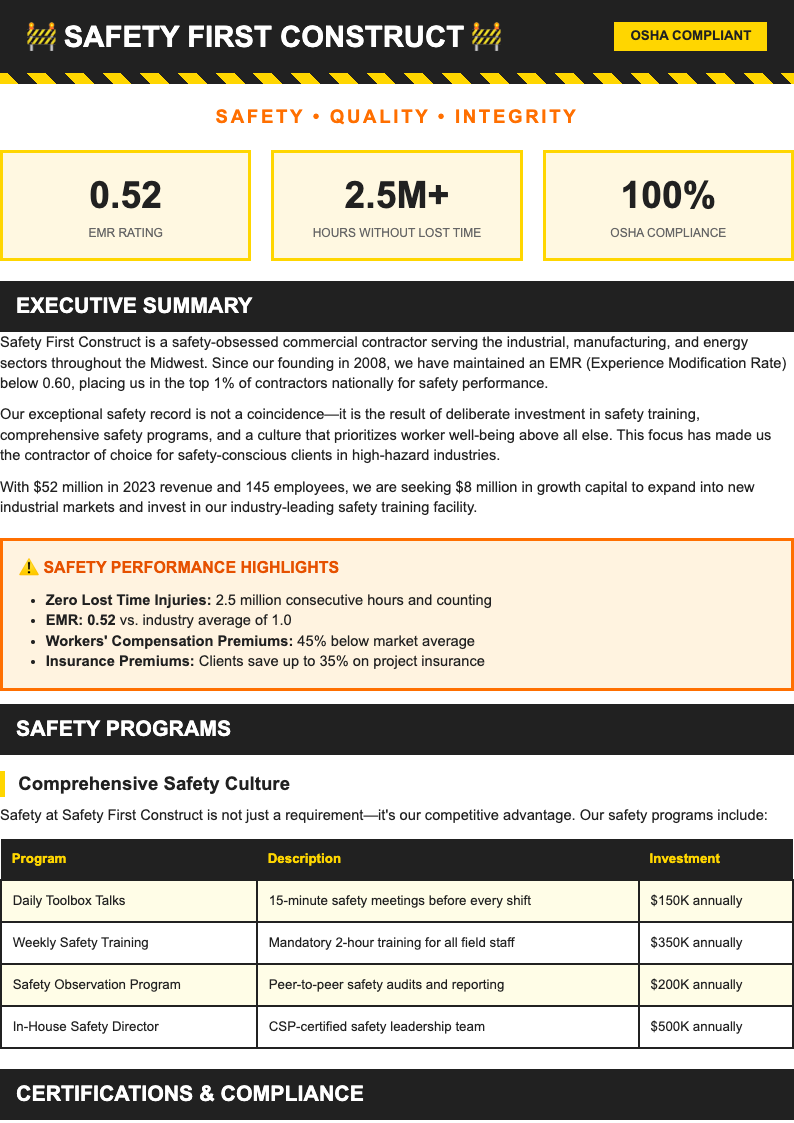
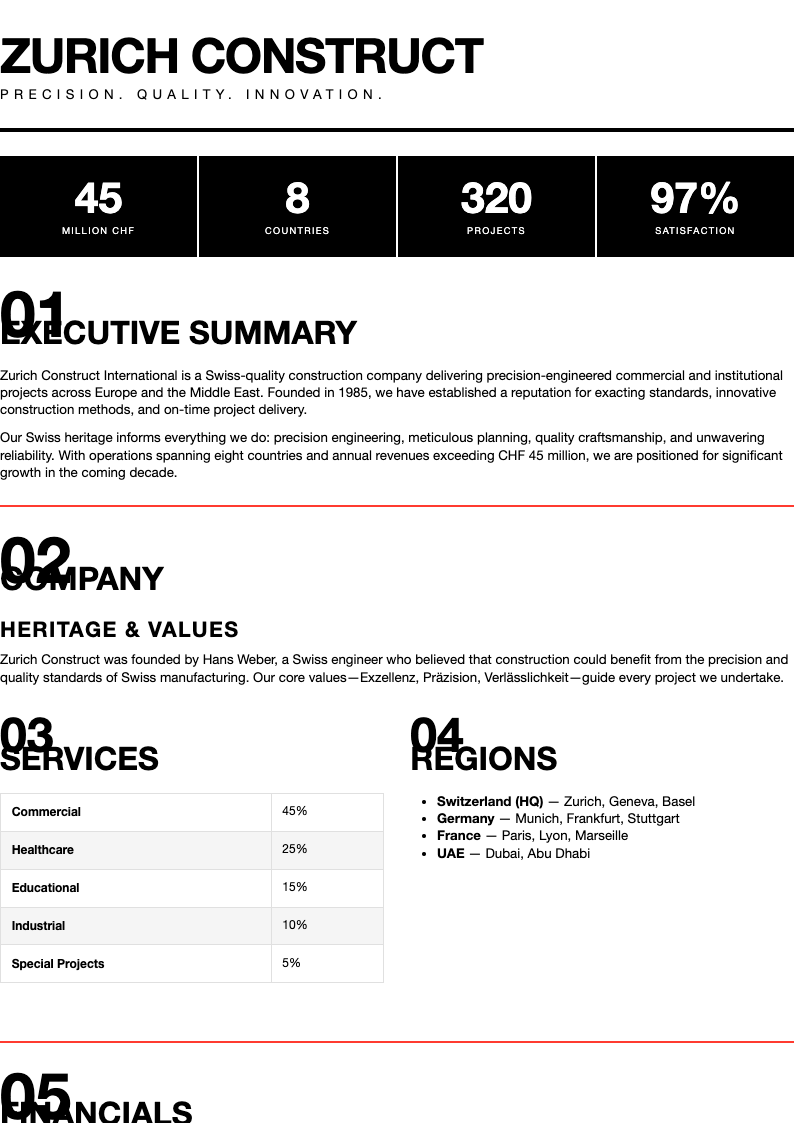
Explore and edit construction business plan templates online. Customize for general contractors, home builders, and specialty trades. Export to PDF.
Browse Templates
Showing 20 of 21 templates
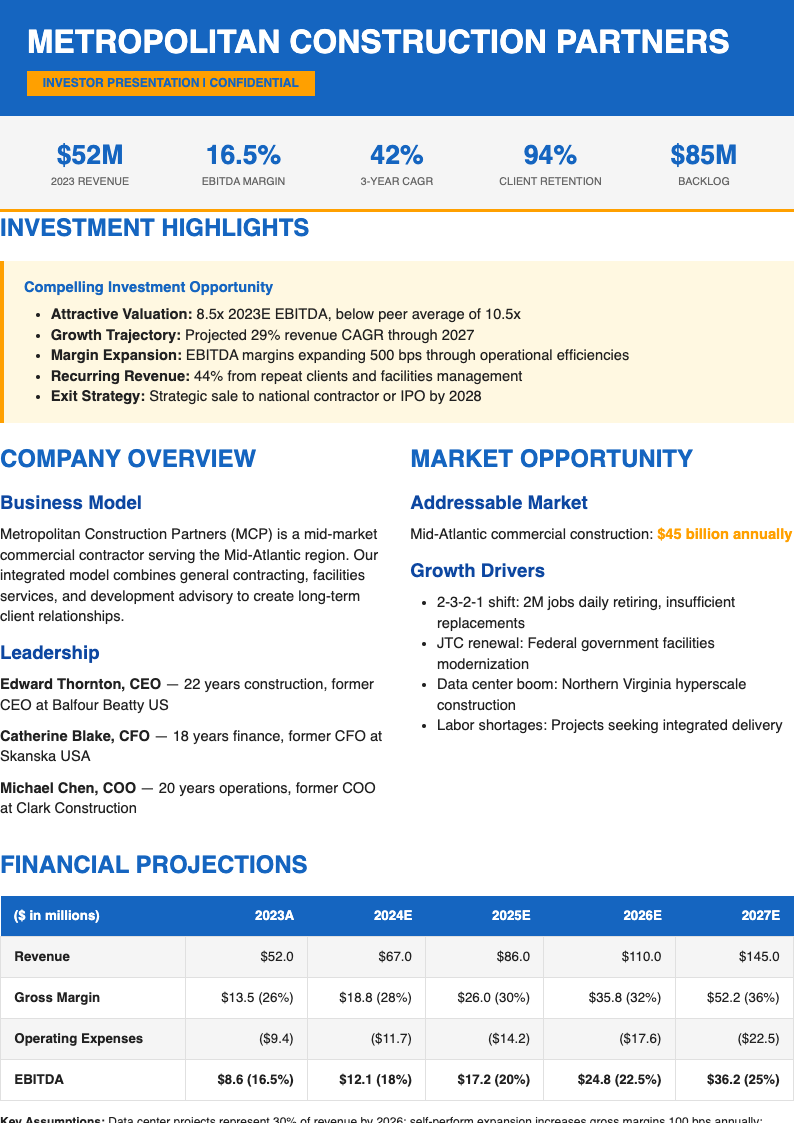
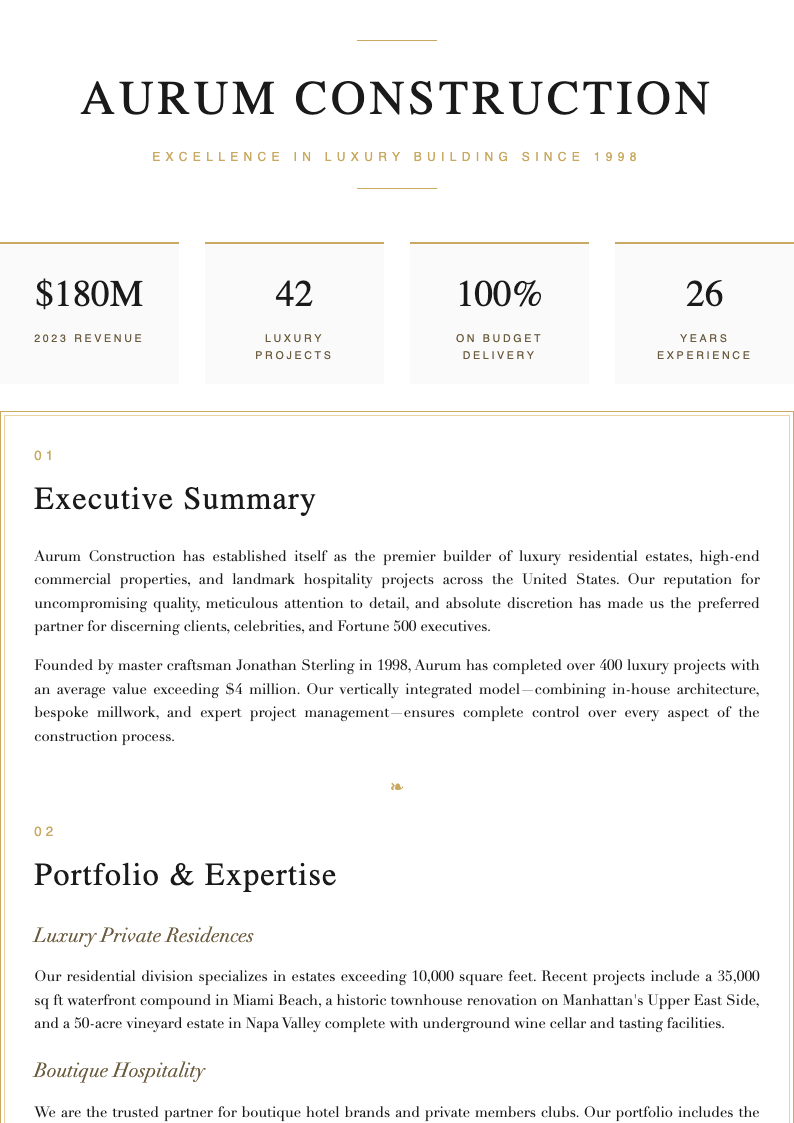
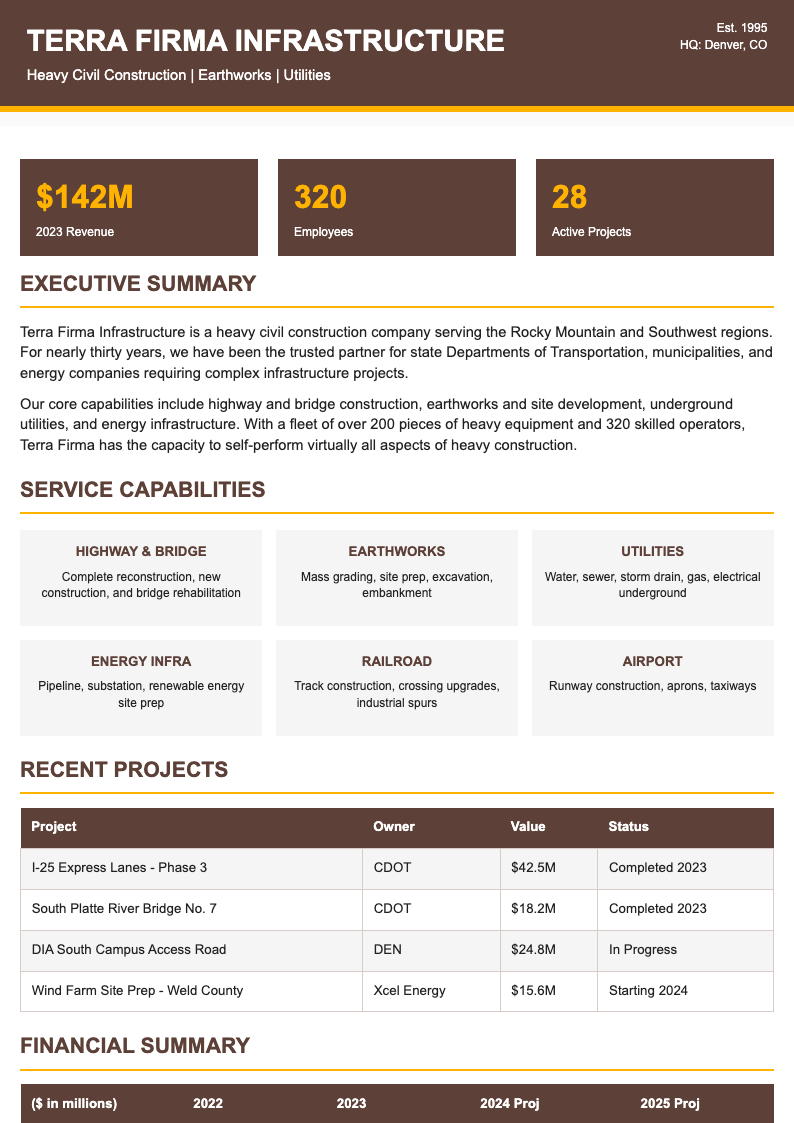
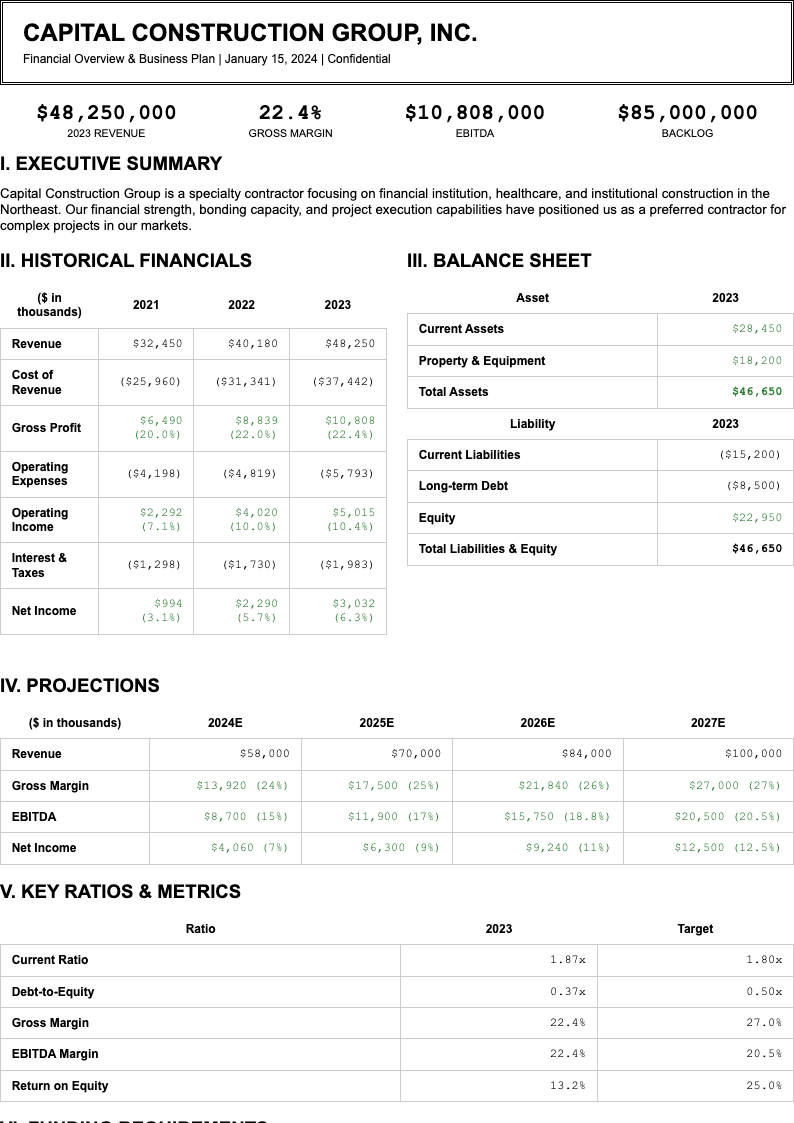
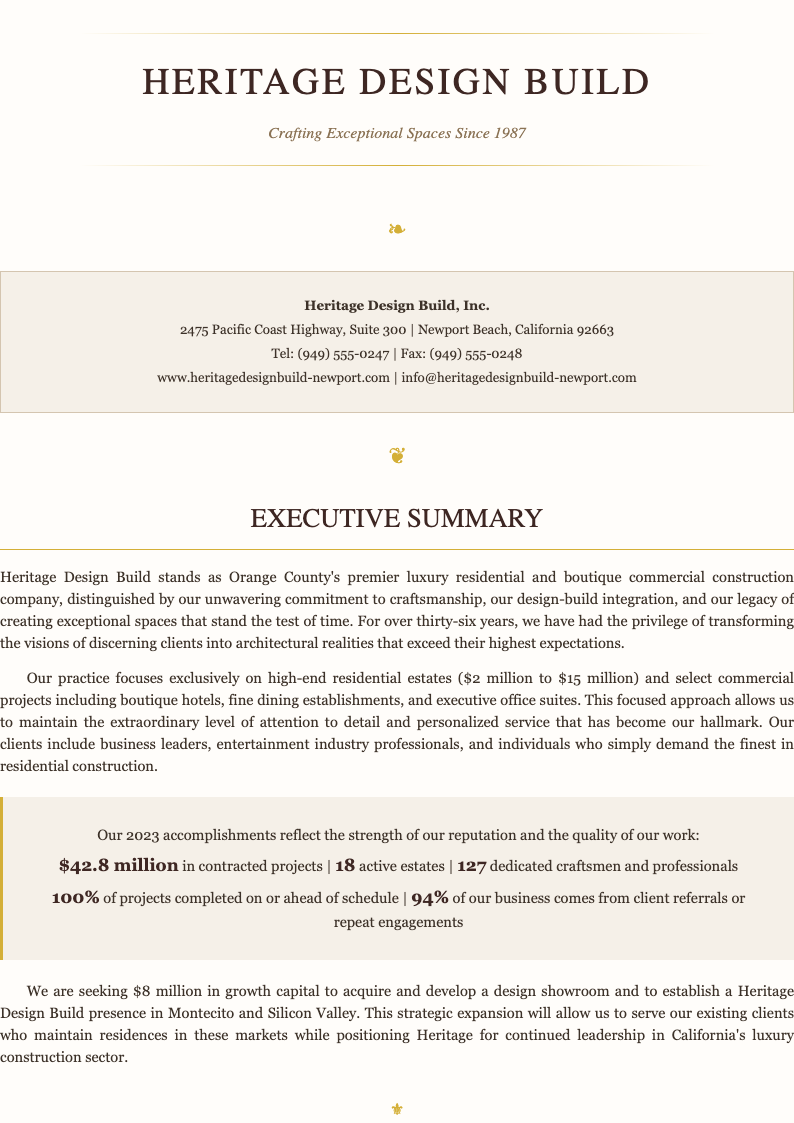
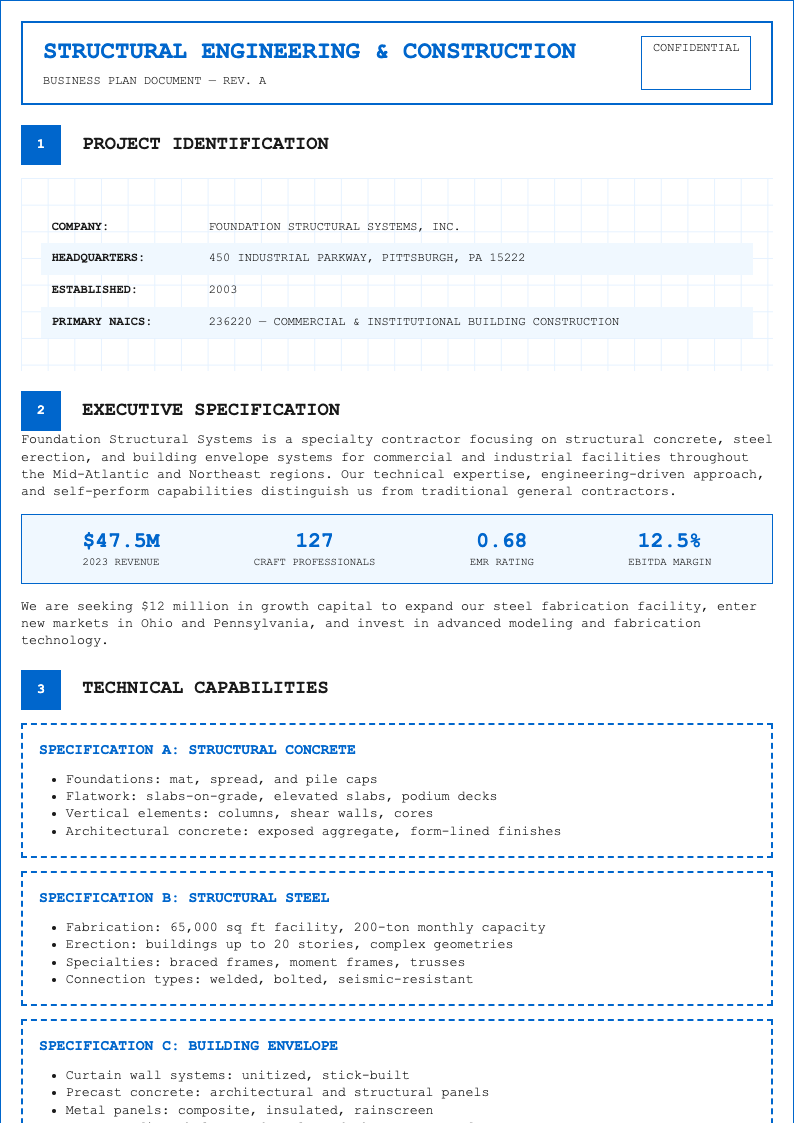
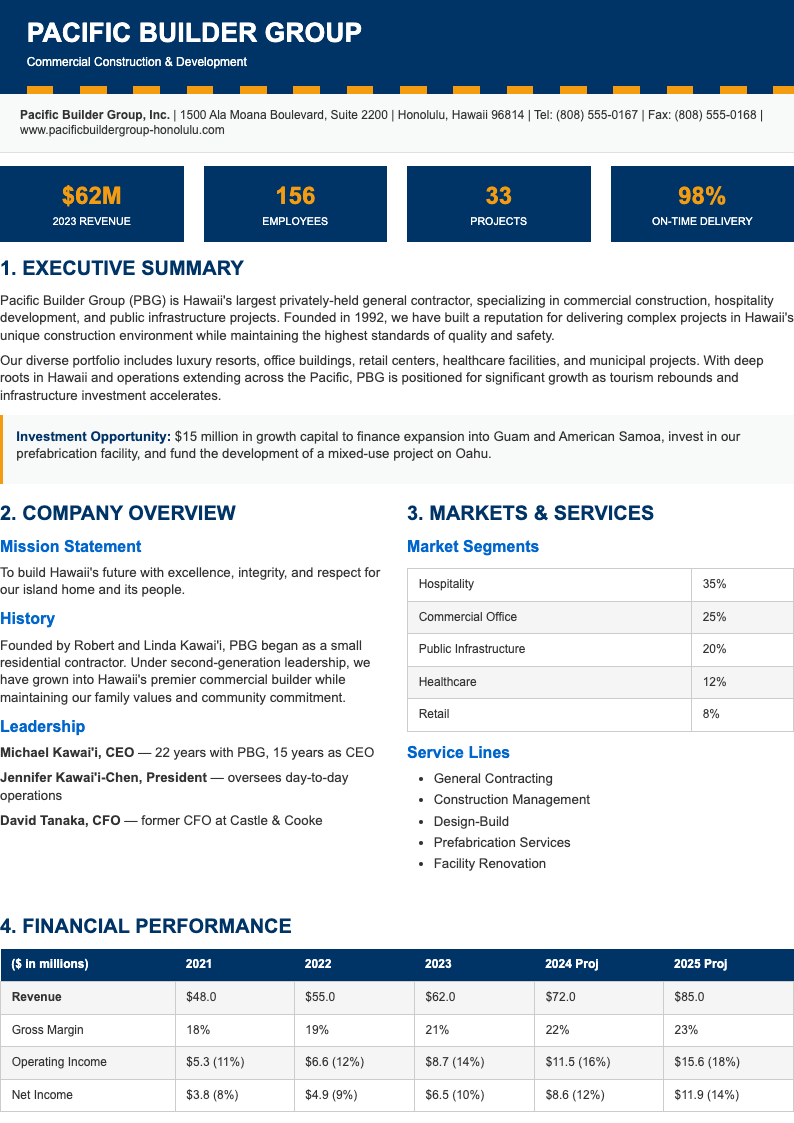
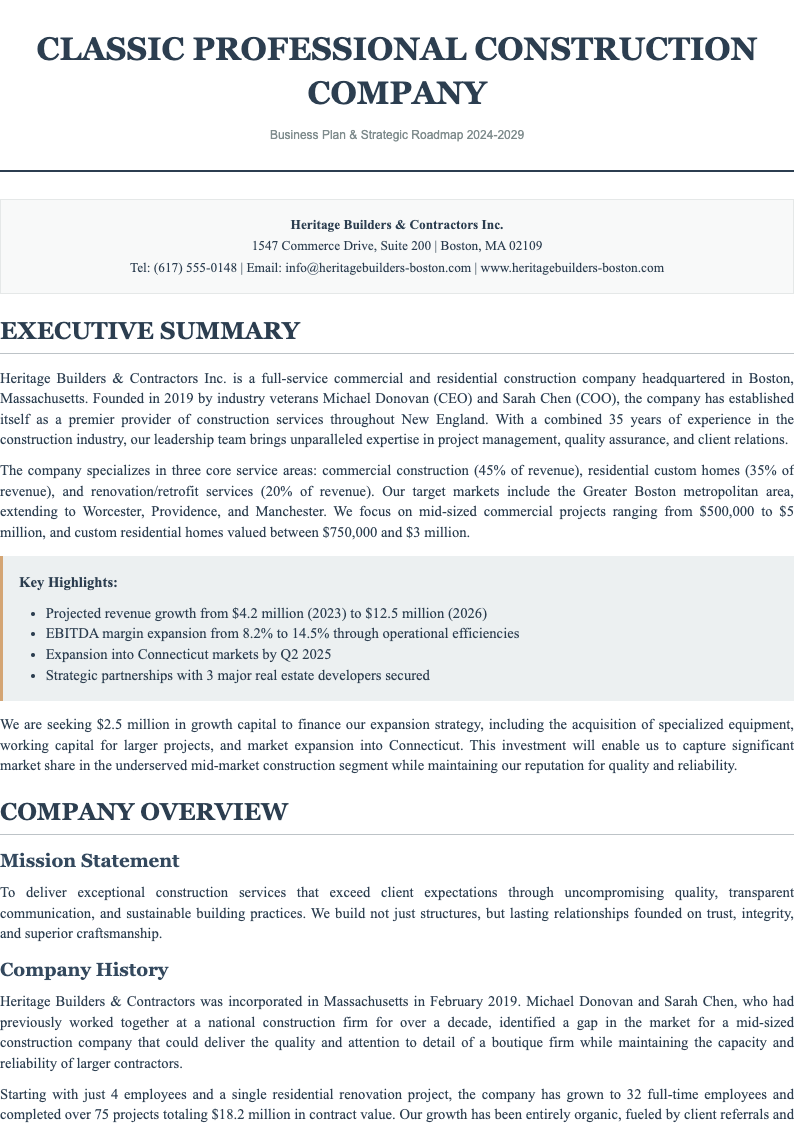
Create Your Custom Construction Business Plan with AI
Don't see the perfect template? Use our AI-powered document generator to create a custom construction business plan tailored to your specific trade and business needs in minutes.

Frequently Asked Questions About Construction Business Plan Templates
Find comprehensive answers to common questions about construction business plan templates. Learn how to create, customize, and use professional construction business plans for your contracting business.
What is a construction business plan template?
- A construction business plan template is a pre-structured document that helps construction company owners outline their goals, services, market analysis, operational strategies, and financial projections. It serves as a comprehensive roadmap for starting and growing a successful construction business. Whether you are launching a general contracting company, residential construction firm, or specialized trade services like electrical, plumbing, or HVAC, a well-crafted construction business plan template provides the framework needed to present your business vision to lenders, investors, and stakeholders. These templates typically include sections for executive summary, company description, market analysis, organizational structure, services offered, marketing strategy, operational plans, and detailed financial projections.
How do I use these construction business plan templates?
- Using our construction business plan templates is straightforward and efficient. Simply browse our collection of professionally designed templates, click on your preferred construction business plan to preview it, then start editing directly in your browser. Our intuitive online editor allows you to customize all text sections, modify headings to match your specific trade, adjust financial projections with your own numbers, add your company branding, and personalize every aspect to reflect your unique construction business. Once you are satisfied with your customized construction business plan, simply export it as a professional PDF document. No software installation is required, and you can access your templates from any device with an internet connection. The entire process from selection to export takes just minutes.
Are these construction business plan templates really free?
- Yes, absolutely! All our construction business plan templates are completely free to use. You can browse the entire collection, preview any construction business plan template, and edit them online without creating an account or providing payment information. We believe that every construction professional and contractor deserves access to quality business planning tools regardless of their budget. There are no hidden fees, subscriptions, or premium tiers. Simply choose a construction business plan template that fits your specialty—whether it is general contracting, residential building, commercial construction, or a specific trade—and start customizing immediately. Export your completed construction business plan to PDF as many times as you need without any cost or limitations.
What should a comprehensive construction business plan include?
- A comprehensive construction business plan should include several essential sections to present a complete picture of your business. First, the Executive Summary provides a concise overview of your construction business plan, highlighting key points about your company and objectives. The Company Description section details your business structure, mission, and vision. Services Offered outlines all construction services you provide, from new builds to renovations. Market Analysis demonstrates your understanding of the construction industry, target clients, and competitive landscape. Marketing Strategy explains how you will attract and retain customers. The Operational Plan covers day-to-day business operations, including staffing, equipment, and project management. Finally, Financial Projections include startup costs, operating expenses, revenue forecasts, cash flow statements, and break-even analysis. A well-structured construction business plan addresses all these areas to show lenders and investors you have thoroughly planned your venture.
Can I customize these construction business plan templates for my specific trade?
- Absolutely! Every construction business plan template in our collection is fully customizable to suit your specific construction trade and business model. Whether you operate as a general contractor, home builder, roofing contractor, electrician, plumber, HVAC technician, landscaper, or any other construction specialty, you can tailor every aspect of the construction business plan. Modify the services section to reflect your specific offerings, adjust financial projections based on your pricing structure and local market rates, customize the marketing strategy for your target audience, and edit all text to match your company voice and branding. Our online editor makes it easy to change headings, add or delete sections, upload your logo, and personalize the entire construction business plan document. The templates serve as a professional foundation that you can build upon to create a truly unique and effective business plan.
Do I need special software to edit these construction business plan templates?
- No special software installation is required to use our construction business plan templates. All templates work directly in your web browser using our intuitive online editor. This means you can access and edit your construction business plan from any device—desktop computer, laptop, tablet, or smartphone—with an internet connection. There is nothing to download or install, which saves you time and eliminates compatibility issues. Our editor is designed to be user-friendly, even for those with limited technical experience. Simply click on any text area to start editing, use the formatting tools to adjust headings and styles, and see your changes in real-time. When you are finished customizing your construction business plan, export it as a professional PDF with one click. This cloud-based approach also means your work is automatically saved, and you can return to edit anytime from anywhere.
What types of construction businesses do these templates cover?
- Our construction business plan template collection covers a wide range of construction and contracting businesses to ensure you find the perfect match for your specialty. The templates support general contracting companies that oversee various construction projects, residential construction firms focused on home building and renovations, commercial construction companies working on office buildings, retail spaces, and industrial facilities. We also have specialized templates for trade contractors including electrical contractors, plumbing contractors, HVAC contractors, roofing companies, landscaping businesses, concrete and masonry contractors, painting contractors, flooring installers, carpentry and framing specialists, demolition contractors, excavation companies, and solar installation contractors. Each construction business plan template is tailored to address the unique aspects, operational considerations, and financial projections relevant to that specific construction sector, while maintaining flexibility for further customization.
How detailed should the financial projections be in a construction business plan?
- Financial projections in a construction business plan should be detailed and realistic, typically covering a 3 to 5-year period. These projections demonstrate to lenders and investors that you understand your construction business's financial requirements and growth potential. Include comprehensive startup costs such as licenses, permits, insurance, equipment purchase or lease, vehicle acquisition, initial inventory, and working capital. Operating expenses should detail ongoing costs like labor, materials, subcontractors, fuel, maintenance, insurance premiums, and overhead. Revenue forecasts should be based on realistic project completion timelines, average job values, and seasonal considerations specific to your construction sector. Include cash flow statements showing when money comes in and goes out, profit and loss projections, and a break-even analysis. The more detailed and well-researched your financial projections in the construction business plan, the more confidence lenders and investors will have in your business acumen and the viability of your construction company.
Can a construction business plan template help secure funding?
- Yes, a well-crafted construction business plan is essential when seeking funding from banks, credit unions, private investors, or government programs. Lenders and investors use the construction business plan to evaluate the viability of your business and your ability to repay loans or generate returns. Our professional templates help you present a compelling case by including all the critical sections lenders expect to see: a clear executive summary, thorough market analysis demonstrating understanding of the construction industry, realistic financial projections showing profitability, operational plans proving you know how to run projects efficiently, and management team profiles highlighting relevant experience. A complete construction business plan shows you have done your homework, understand the risks and opportunities in your market, and have a solid strategy for success. This level of preparation can significantly improve your chances of securing the capital needed to start or expand your construction business, whether for equipment purchases, working capital, or taking on larger projects.
How do I write the market analysis section of my construction business plan?
- Writing an effective market analysis section in your construction business plan requires thorough research and clear presentation. Start by identifying your target market—are you serving residential homeowners, commercial property developers, government agencies, or other contractors? Research local market conditions including population growth, housing starts, commercial construction permits, and infrastructure projects in your area. Analyze industry trends affecting your construction sector such as material costs, labor availability, green building practices, and technological advances. Identify your direct competitors by name, including other construction companies offering similar services in your market area. Document their strengths, weaknesses, pricing, and market share. Clearly articulate your competitive advantages—whether it is specialized expertise, superior customer service, faster project completion, better pricing, or innovative construction methods. Include data on market size, growth projections, and how your construction business will capture market share. A thorough market analysis in your construction business plan demonstrates to readers that you understand the landscape you are entering and have a strategy to succeed.
Why is a construction business plan important for a general contractor?
- A construction business plan is critically important for general contractors because it serves as both a strategic roadmap and a communication tool. For general contractors managing multiple trades and complex projects, the business plan helps organize thoughts about business direction, target markets, service offerings, and growth strategies. It provides clarity on financial requirements including startup capital needed for equipment, insurance, bonding capacity, and working capital to cover project costs before client payments. The construction business plan also helps general contractors articulate their value proposition to clients, distinguishing them from competitors in a crowded market. When seeking larger projects or commercial contracts, clients often request to see a construction business plan to verify the contractor's stability and capability. Additionally, the plan is essential for attracting investors or securing loans to expand operations, purchase equipment, or take on bigger projects. For general contractors specifically, the business plan should address project management capabilities, subcontractor relationships, bonding capacity, safety protocols, and how to balance multiple concurrent projects effectively.
What should I include in the services section of my construction business plan?
- The services section of your construction business plan should provide a detailed description of all construction and contracting services your business offers. For a comprehensive overview, organize your services into clear categories. New construction services might include residential home building, commercial structure construction, industrial facilities, or specialized building types. Renovation and remodeling services could cover kitchen and bath remodels, home additions, basement finishes, office build-outs, or historic restoration. Specialty trade services should detail specific expertise such as electrical work, plumbing, HVAC installation, roofing, concrete work, framing, or insulation. Additional services might include design-build assistance, project management, permit handling, consultation, or maintenance services. For each service in your construction business plan, explain what is included, your process or methodology, any certifications or special qualifications, and typical pricing or pricing structure. If you target specific client types, mention how your services serve their particular needs. The services section demonstrates the full scope of your capabilities and helps readers understand exactly what your construction business offers.
How often should I update my construction business plan?
- Your construction business plan should be a living document that you review and update regularly, typically at least annually or whenever significant changes occur in your business or market conditions. Schedule an annual review to update financial projections with actual performance data, adjust revenue and expense forecasts based on your experience, revise growth strategies based on what worked and what did not, and update market analysis with new competitive intelligence and industry trends. Beyond annual updates, revise your construction business plan when launching new services, expanding into new geographic markets, making major equipment purchases, hiring key personnel, seeking additional funding or investment, experiencing significant changes in the construction industry such as new regulations or material costs, or pursuing larger projects that require demonstrating greater capacity to clients or lenders. Keeping your construction business plan current ensures it remains a useful tool for decision-making and continues to accurately represent your business to stakeholders. Many successful contractors also use their updated business plan as a benchmarking tool to measure progress against initial goals and projections.